Start by doing some reflecting in your learning log. What kinds of subjects might be seen as un-photographable? How might you go about portraying them using photography?
OCA course book Assignment two.
Looking at this an idea that comes to mind and could argue it’s in vogue at the time, although I hate to say that term. A lot of people are jumping on the bandwagon. ”Mental Health” is what I’m relating too. It’s nothing new in my eyes it’s just more in your face today than it was said some ten years ago.
Everyone has some form of mental issues; it’s just how one chooses to let people know. Talking is the apparent answer though is probably the hardest one to achieve in today’s modern society.
The idea of seeing one’s self in an image looking wholly different and showing a side that is unphotographable will hopefully show what it is I’m trying to portray.
”Reflection on Life”
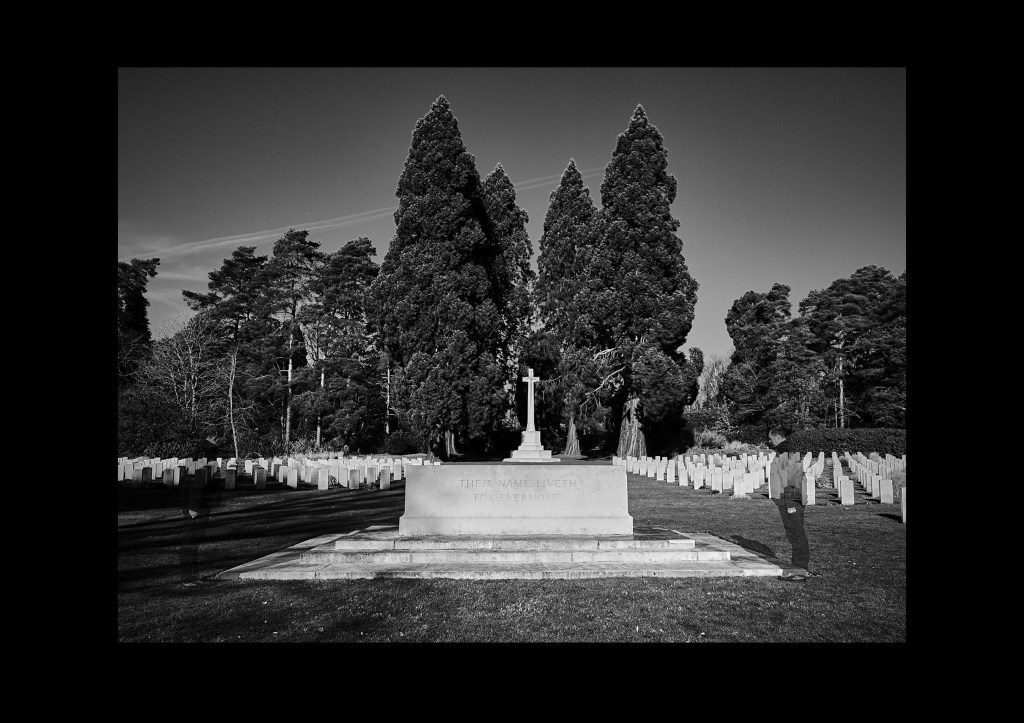
The idea has come from the image above. I’d need to take a few self-portraits in various guises for the concept to work. It draws from the previous exercise and projects with manipulation and telling a story.
After reading my tutor feedback part on suggested reading, I noticed Carol Reeds (1949) The Third Man.
Intrigued in why this was in the write up. I’d sort of known about the film but can’t say I’d ever watched it. More listened to my dad talk about it as a child. It was never on my list of films to watch.
After numerous internet searches only to find small clips and the trailers. I decided to rent it from a well known mobile phone company that lets you download or rent music, films and Tv programmes etc.
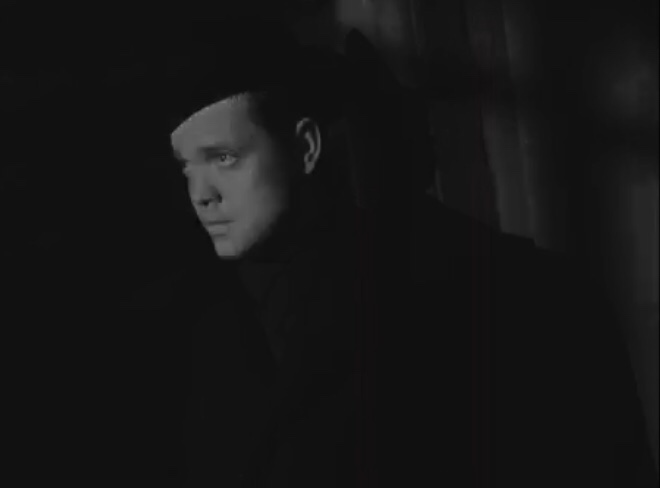
A classic black and white film. What took me by complete surprise was the use stunning cinematography. I can see way my tutor has recommended it. My style of black white photography and how some of the scenes of harsh shadows and strong shapes. The use of negative space, silhouettes great characters wearing hats and light hitting their faces at prime times in the frame. Fantastic to watch how light had been used.
Had this been in colour I just can’t see how the viewer would of felt. The music and light hold the drama and suspense on the set and frame. Like I had said before it wouldn’t have been a film I would watch. The images in the tunnel in the trailer the face that is revealed from the shadow. That’s is how I see my compositions at times.
Screenshot from The Third Man trailer
By waiting in the shadows yourself, you are at times waiting/fishing for that subject just to fall into a small sliver of light or come from the light into the shadow. Another area to look now for inspiration and ideas ahead of assignment two.
Bibliography
THIRD, T., Official, -, & Trailer, O. (2015, May 7). THE THIRD MAN – Official Trailer – Restored In Stunning 4K. YouTube. Retrieved February 12, 2020, from https://youtu.be/r9yyDEDGlr0
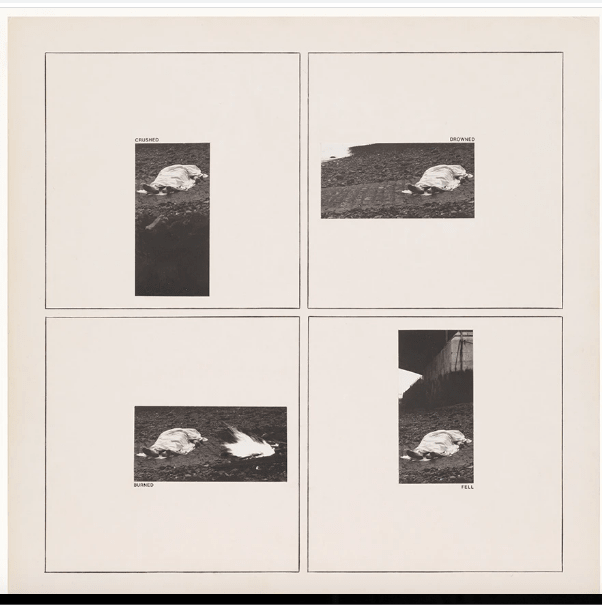
Initially looking these four images quickly nothing stands out. However, once you slow down and start to analyse the images, things start to stand out. Yes, this was mentioned within the student feedback but you never see the images first time round. The titles do speak for themselves when you look closely, but without zooming in they are just four pictures of roughly the same thing.
It does ask the question of what is truthful. I find now in photography and in the news how an image can manipulate the truth. This has been going on for decades. Do we even know what’s real and what’s not? Fake news and the likes. Will anything we read to be true is what we are seeing true. How much of the daily life be manipulated to portray what we want to be true. When I think back in time what spring to mind for me is the luna landings the race for space. I’m extremely open to what people think happened then and the classic conspiracist ideas. The question I would raise now, “why hasn’t there been more than 12 walked on the moon?”
By changing the perspective you change the observer’s point of view (POV), you also changed the narrative to the image. I’ve seen this many times when the photographer changes the POV so that the viewer sees something else. How this changes the thought process of the viewer is by changing the experience the photographer is portraying in the image capture.
When I think back to what I provided in assignment 1. What is hiding in the shadows? By changing how the picture is edited in post and revealing the hidden parts of the image, yes I’m showing what hiding but I’m also revelling the hidden data in the file. This is what can be manipulated and pushed in the post edit. Ansel Adams said.
Ansel Adam “You don’t take a photograph, you make it”.
Post edit in some ways can destroy an image in the non-puress eyes. Straight out of camera (SOOC) pictures are manipulated whether you like it or not. Consider what you have used the equipment used the camera settings you are manipulating the image from the start. The exposure triangle is this in its raw form. Freezing the action, DoF, ISO the way you are composing your image and set up. Controlling the light through exposure compensation to actually moving around with your feet and the time of day.
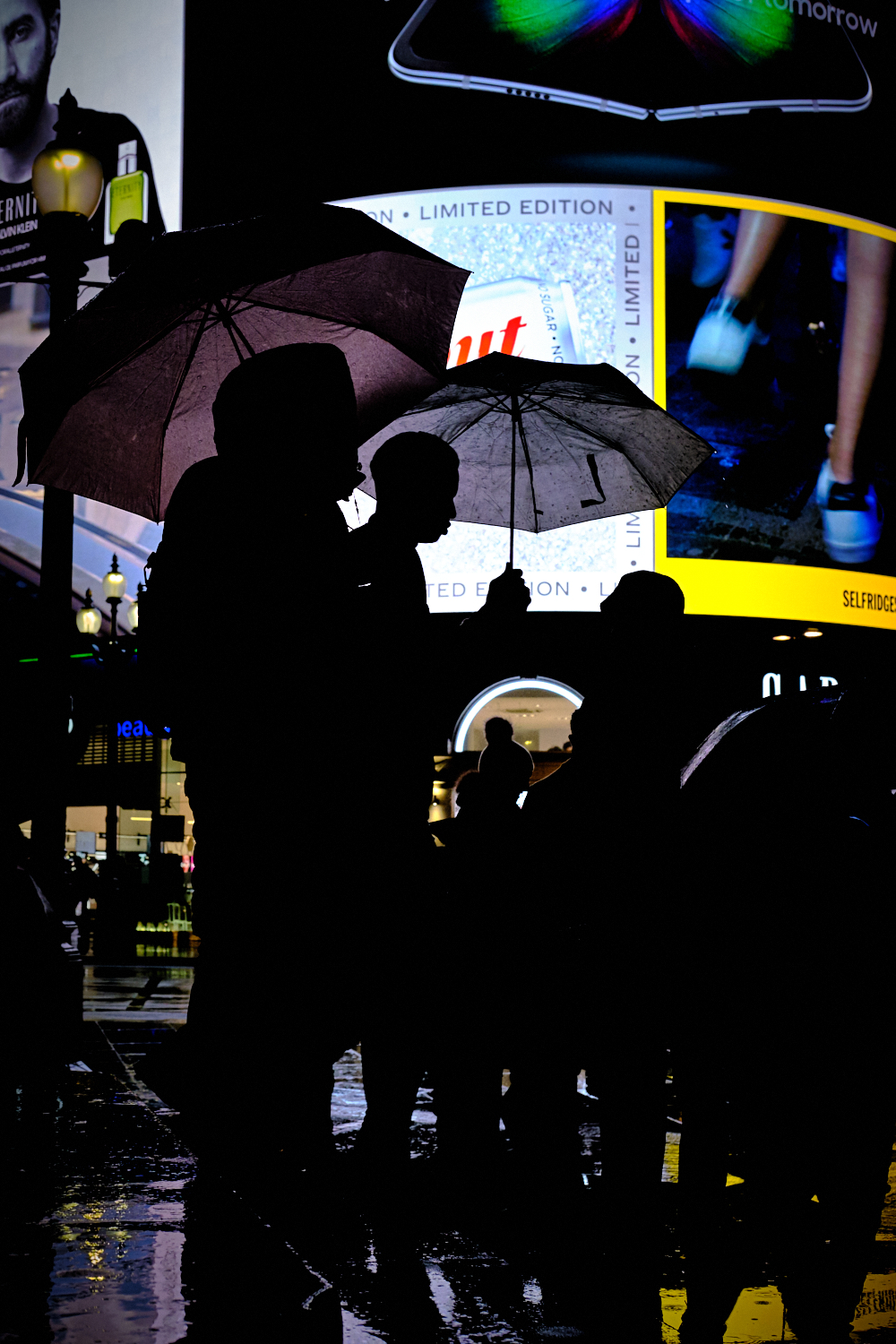
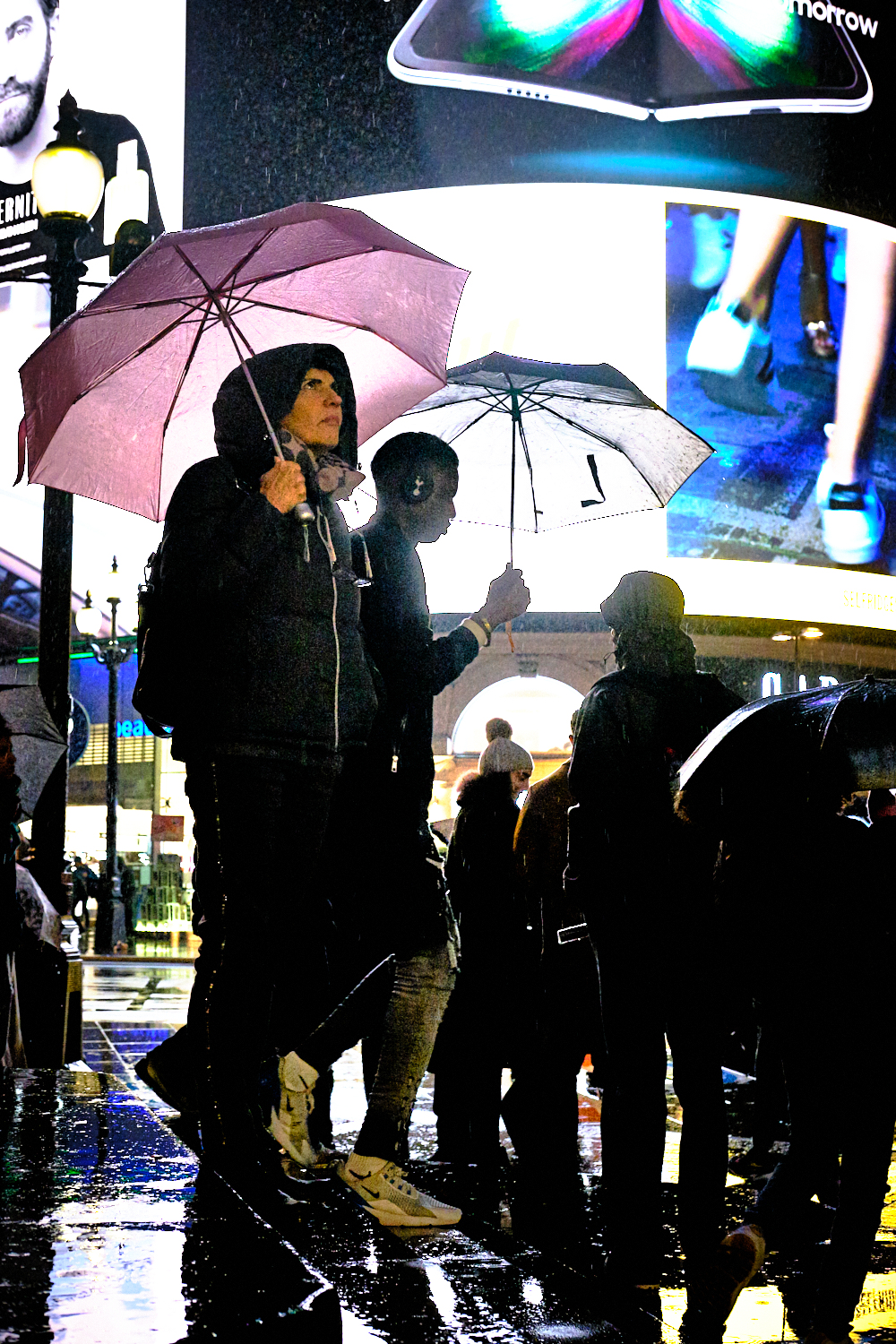
The two images above were taken in London on a wet winters night. The top one you can see I like to capture silhouettes and drama. With the bottom one, I’ve opened up the shadows increased the exposure where you can make out who they are. What one do you prefer whats the story being captured? Had this been exposed for the two people would this give the viewer something to be engaged with the photographer. Do the silhouettes against the bright neon lights hold the viewer in with what’s happening in this composition what is it the photographer what you to see?
I’m a big fan of shooting Street photography predominantly in high contrast black and white. However, I’m always open to new ideas and seeing how different photographers challenge themselves.
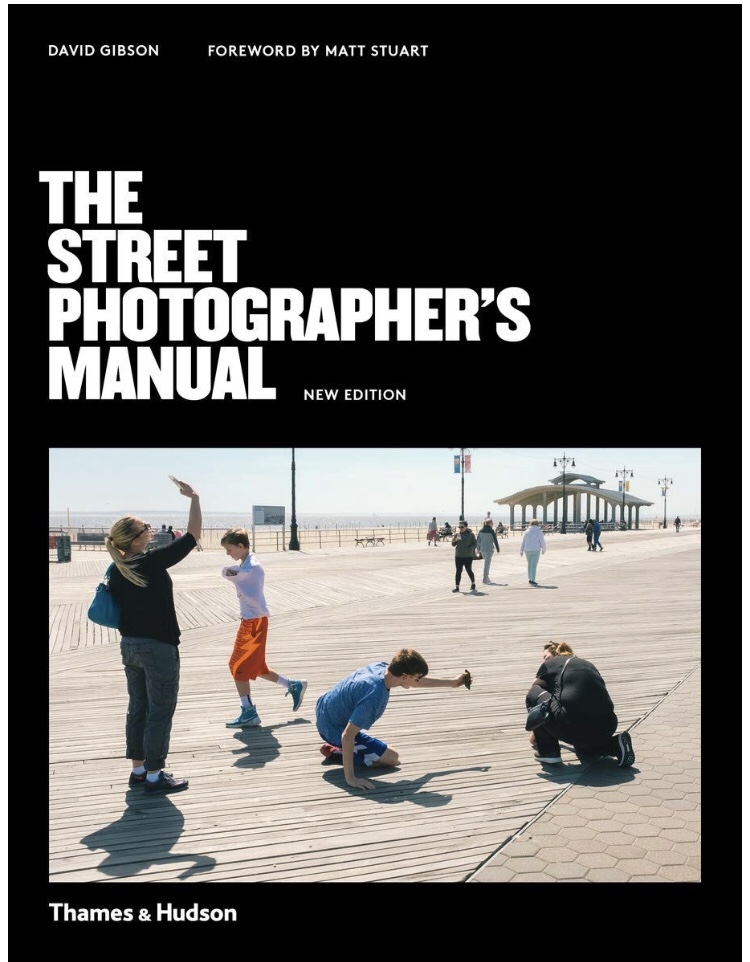
The Street Photographer’s manual (new addition by Thames & Hudson)
With reading other students problems with hitting the streets, I’d probably say this is an ideal book for those that fear the idea of shooting street whether this is from a candid approach or just having the confidence to shoot people without actually asking them.
Confidence is a hurdle in itself when shooting on the street. A friend gesture to whoever to shoot will generally help. Unless your taking it to the extreme in the likes of Bruce Gilden style then you have to be prepared for confrontation with your subject.
Remember there is no real law of taking pictures of people unless it’s of a military/site of sensitive nature. It’s a common-sense approach added to what you think is ethical.
Ultimately, I believe you have to walk the street and take pictures to learn from your mistakes. Practice, practice practice is the key to great images. Gone are days of 30 odd pictures with film. You can take thousands of pictures in a day depending on your memory card size and how many you use.
• Which of these projects resonates most with you, and why?
I found I could resonate to Peter Mansell project more than the others. I find photography a kind of mental therapy to keep the mind occupied and working. So many people suffer in silence in today’s modern world. I’m not a person that can let feelings go through talking unless it with people with common ground. Expressing one’s thoughts through photos for myself, I find easy and quite liberating at times.
• How do you feel about the loss of authorial control that comes when the viewer projects their own experiences and emotions onto the images you’ve created?
I see that as a compliment to the photographer more than anything else. I had some recent comments made on the images I took of graves from Brookwood Military Cemetery. I would say this is the same for both a written article, TV/Film productions. So many viewers can resonate to pictures with personal feelings.
I think to look at an image and not seeing anything that doesn’t resonate your not looking correctly or close enough.
This is at times during EYV I tended not to do and move onto the next part. Although it’s not been full-on outside with my camera at the ready its been intriguing to see that its something I’ve done over the years. Taking any picture whether by film or sketch you’re documenting something.
Mood
Subject
Light
Action
Emotion
Expression
Your documenting it, the life of your family, pets, adventure. All have a form of documentation. I have seen at times how news teams can document life first hand, but when you don’t see the final product till weeks later, it annoys you that that have twisted what you have said or not shown the side you were trying to portray.
Documentary, reportage, photojournalism, art photography. All seem to along the same lines. Like Seawright mentions its the fine line between them. I see every picture captured shows lines of the above. Henri Cartier-Bresson decisive moment documents a capture in time. Add something special to it and its Art. Photography is a form of art that I believe is here to stay for and with technology changing this will endeavour to be greater in years to come.
Whilst trying to understand what it is this assignment is about. Ideas start to unfold.
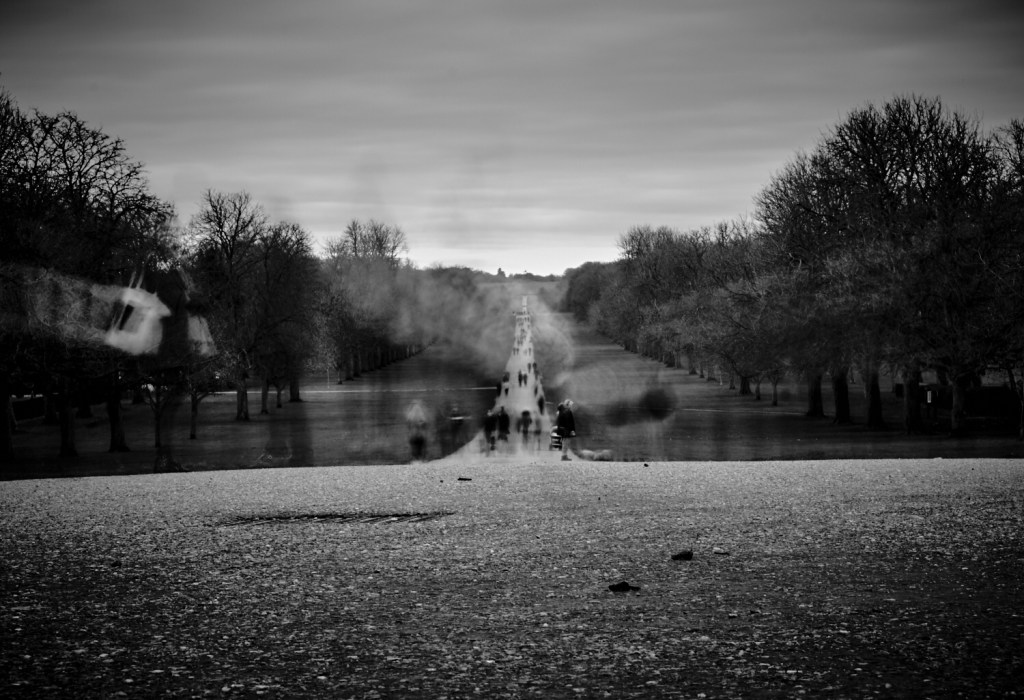
The idea of a long exposure to hide things within the composition came to mind. Using an ND filter to cause an intentional blur.
Could I use a few interesting locations that are busy majority of the days and show a different point of view.
A few ideas that I’ve taken this Saturday whilst walking around Windsor town centre. Initial thoughts were to capture the changing of the guard but it’s not the time of year to see the bright red tunics marching past. So I looked at a few locations one being the start of the Long Walk and a few in town.
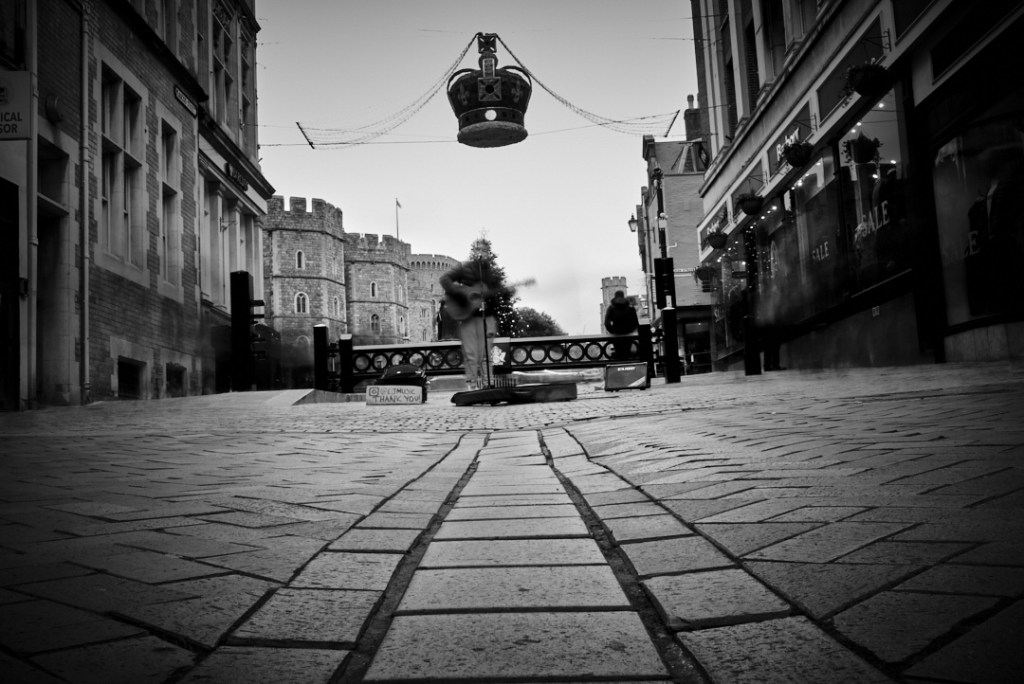
The one that I liked the most was of a young man busking and singing the song ”Dancing on my own” by Callum Scott. By isolating him and keeping the shutter open longer it seemed to work with the lyrics of the song he sang. ”Dancing on my own”
Initial thoughts to this assignment have had me blank for some time. It’s not like the square mile in EYV. This has had me thinking considerably harder and outside the box on this one.
Ideas
Lower ground Vs higher ground (headshots and feet shots at the same place but at different times in the day, considered the guard mount at Windsor castle 🏰 )
what hides in the shadows (using a street photography style and open the shadows up to revile what’s hidden)
Tourist town to what’s normal after the from a residents POV
It’s a hard one to decided on, which one I decided will openly show my vision. Although this is meant to be an opening gambit to the tutor, it feels quite different. I know what ever I produce ill be happy with it. It’s subjective to anyone else. I hope to show both technical and thought process with both the images and the written word.
Last night I had my introduction chat Andy, my new tutor. Offering some sound advice on what I need to do for this next module on Context and Narrative.
This module seems daunting at first and a huge change in direction from EYV. I’ve still got a small amount of refinement to EYV and prepping for assessment.
I’ll start C&N in the coming weeks and after the Christmas period into January 2020 and prepare to submit assignment one.

 Part Two Context and Narrative BA HONS in Photography OCA