

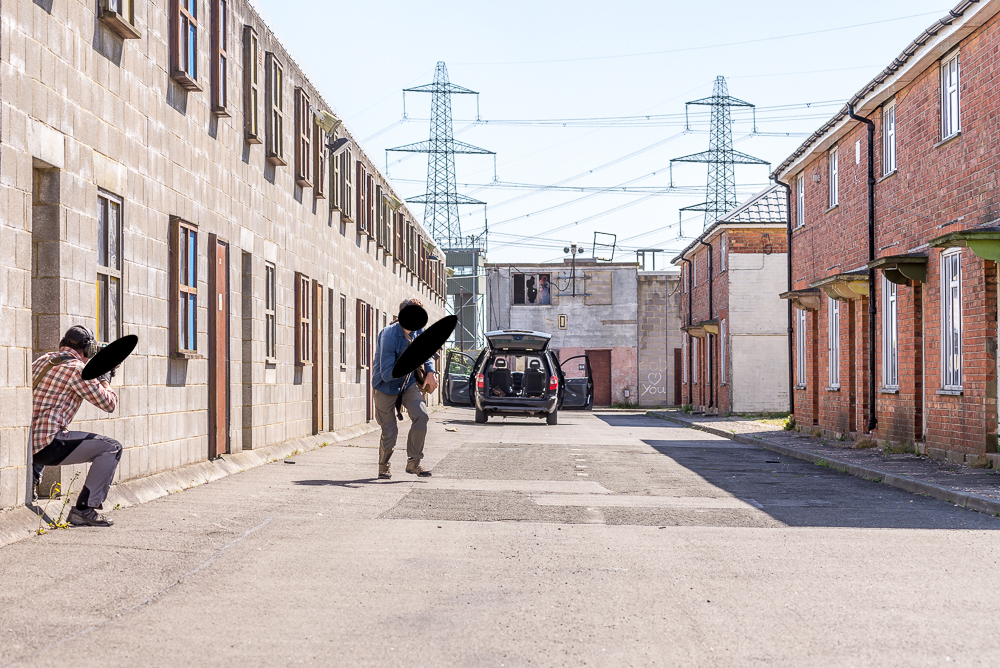
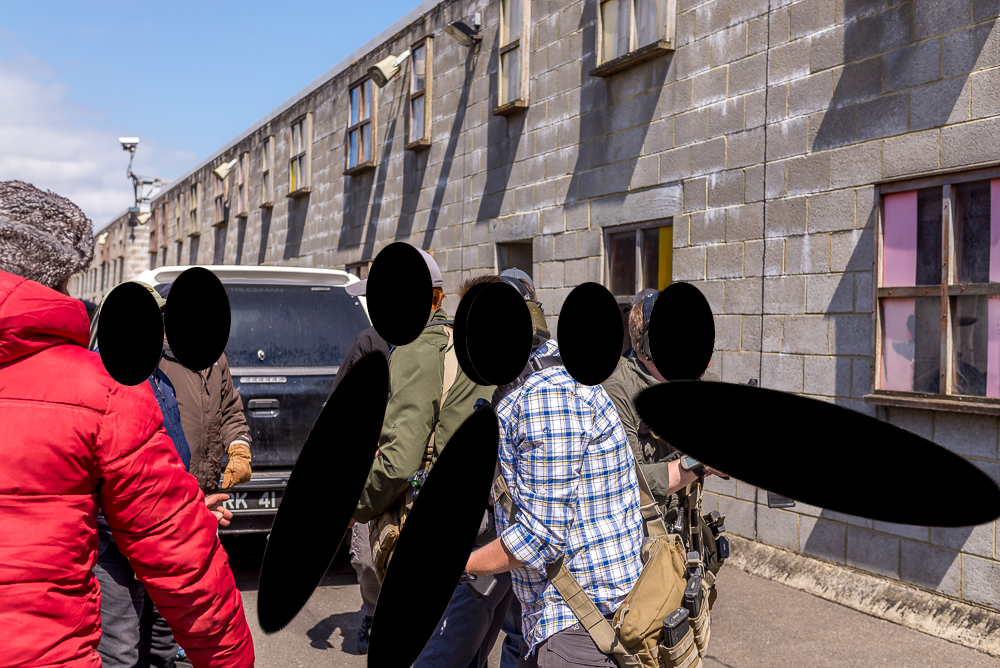
At times I find I’ve been privileged to be able to work in some unusual areas throughout the years. The two images above have for me the other side of the coin Sarah mentioned within her project. These show the action within a desolate village location where hers show the emptiness within them. Having been through and worked in places like her images I can fall well understand what it is she is capturing. It’s interesting to see the emptiness however to feel the anticipation of what is around the corner waiting for them!
- How do they make me feel?
- I kind of like them, as I’ve mentioned above its the anticipation of what waiting around the corner effect.
- Is Public Order an effective use of documentary or is it misleading?
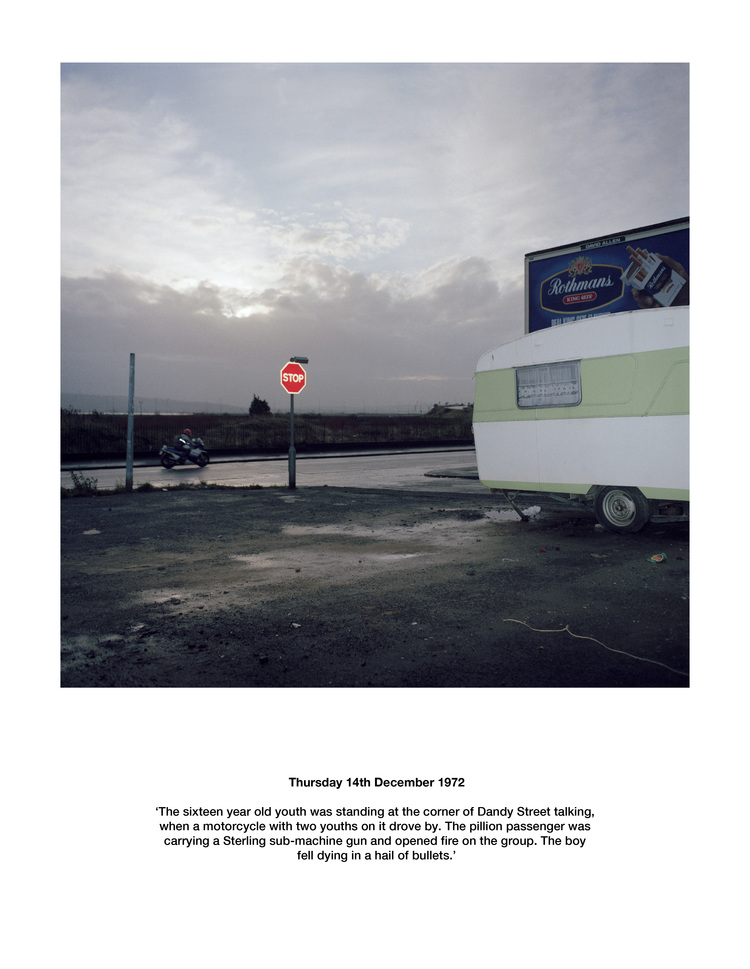
- Had I not known what these images where about it may sway me to say yes, but it’s having an understanding of what is captured within the images, roadblocks empty streets, key locations (jobcentre, night club) areas of tension, old tyres and objects that have been thrown. The images that may confuse people are they facades of houses/buildings and empty rooms etc unless you know what they are.
Bibliography
(n.d.). Sarah Pickering Public Order. Retrieved January 15, 2020a, from https://vimeo.com/11931505 [assesed 20200115](n.d.). Public Order – Sarah Pickering. Retrieved January 15, 2020b, from https://www.sarahpickering.co.uk/works/public-order/
- Had I not known what these images where about it may sway me to say yes, but it’s having an understanding of what is captured within the images, roadblocks empty streets, key locations (jobcentre, night club) areas of tension, old tyres and objects that have been thrown. The images that may confuse people are they facades of houses/buildings and empty rooms etc unless you know what they are.
 Part Two Context and Narrative BA HONS in Photography OCA