20200612-recorded conversation

I recorded this conversation a few weeks ago while being under lockdown with my wife. What was strange while doing this is that it felt weird recording it while she wasn’t aware. Not something I would do and wasn’t overly keen to do in the first place.

The conversation was over the repeat of the England and Scotland football euro 96 game.

We started to go over how the game had changed, the reaction from the fans compared to today’s fans. The atmosphere from within the stadium and how we thought this was the time football was coming home.

I knew exactly where I was on that day compared to my wife. I was on tour in Northern Ireland working alongside a Scottish Regiment. You could say that the atmosphere in our base was as electrifying too.

When listening to it playback the gaps are more than likely when we have been glued to the game. The tension can be heard and excitement when England scored. Interactions between us were when my wife was trying to attach something to an email for her work. I answer short and sharp so that I’m back in the game.

Elements that the brain forgets are normally small chunks of data compared to elements that can be related to visual points. I couldn’t recall what I was wearing or what the weather was. Had this been a photograph or picture it’s very easy to recall small amounts of information from that day.

People have used various ways to recall information by learning and exercising your memory. KIMs games and how to recall information by creating a virtual story in your mind.

Using 1-10 as example you place 1 item in the story, 2 and so on.

1 spoon, 2 blue cars, 3 apples, 4 men, 5 peacocks etc this creates a story that can recall over time.

Seeing a picture of yourself can recall memories and feelings from that day. The brain is a huge data base of information being stored. Even after so many years where data can be lost, it only takes a small bit of data to at times recall the full amount of information.
20200612-The archive

Exercise

Question for Seller re-situates images in a different context and in so doing allows for a new dialogue to take place. Reflect on the following in your learning log:

• Does their presence on a gallery wall give these images an elevated status?

I think from a personal point of view they do. By placing them as a gallery, people will look at them differently than in a magazine as a single picture. However, I don’t think it elevates them any higher just because they are on a gallery wall. I have seen gallery wall pictures and not given it a second glance because I thought it wasn’t worth it. A gallery wall is very hit and miss. Some people will respond well due to who the photographer is. Some will be just because of the pictures and how it attracts the viewer.

• Where does their meaning derive from?

Im not sure as to the meaning, the images seem very portraiture and not so much of a series that I can tell.

• When they are sold (again on eBay, via auction direct from the gallery) is their value increased by the fact that they’re now ‘art’?

I believe it will depend on who’s viewing them. I’ve seen many people use eBay to profit from someone else stuff. Place it in a frame give it some context or a small narrative at that adds weight and ultimately money and profit.

When anything is placed on a selling page whether this is eBay or social media selling pages. ”One man rubbish is another man’s treasure”.

Resources

20200606-Gregory Crewdson_additional work

I’ve recently found this BBC Two clip of Gregory Crewdson setting up for a series of images. The size of his team is outrageous. This isn’t what I thought he meant by a team. This is something like id expect to see on a Netflix film. He doesnt even take the picture himself. Not sure in. my eyes how he can be called a photographer, is this not a visual maker or something.

He has the vision I presume to see the compositions and how the lighting is used but, on the other had he has a touch up team editing the shot, which I guess a lot of professional photographers have but I presume they are behind the camera at least?

The clip goes on to mention that this particular series he was constructing was going to sell in regions of $60K to potential sellers. I wonder how much it cost to construct these series. Closing a street, turning the lights off, cost of the production team and kit, wages for the guy that takes the picture, etc.


20200526-Gregory Crewdson

Watch this YouTube video about Gregory Crewdson and his work and consider the questions below.

http://www.youtube.com/watch?v=S7CvoTtus34&feature=youtu.be [accessed 24/02/14] to note link doesn’t work.

• Do you think there is more to this work than aesthetic beauty?

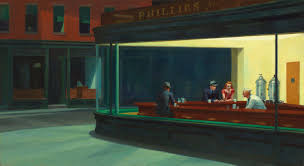
I have to say I’ve watched a few clips of his work; nearly all have a cinematic feel more than a photographic feel. I have to say I don’t find his style has much of a connection to me. Stage manage photography doesn’t do anything for me. I find it incredibly dull. There is a dark side to his images where I dont think I want to find out why. Some remind me of the Sky Atlantic TV series called Ture detective which covered crimes of a serial killer with a messed up killer and mentally challenged detective. Although some remind me of Edward Hooper’s paintings of Night Windows and Offices, Crewdson does go into to mention his work during the second clip.

edward hooper
© Edward Hooper nighthawks

• Do you think Crewdson succeeds in making his work ‘psychological’? What does this mean?

I found elements extremely hard to grasp and understand what it is he’s trying to portray to the point I find slightly disturbing. It might just be me. I just don’t get him. I find him a little confused. You could say he’s trying to show his mental state with these pictures however I’m not sure i would like to find out his mental state.

• What is your main goal when making pictures? Do you think there’s anything wrong with making beauty your main goal? Why or why not?

I’ve always tried to find something of beauty within a composition before it becomes a picture. Applying rules and how light, dark, shadows and subject are used will ultimately be your final piece. I like to think that a combination of those elements becomes the beauty of a picture. Why else would you take it. Beauty is, however, subjective as with everything else. It’s how you show that I feel. Crewdson’s work must have an element of beauty I see that in how he lights his pictures with that strong cinematic feel to it. I’m not looking at the composition or the subject. I’m seeing how he’s used light to create that beautiful effect—light is needed in the first place to build a photograph.

The first clip I watch, the music adds a sense of drama to the images of darkness and unknown.

Biography

Crewdson, G., Photography, -, & -, P. (2016, April 3). Gregory Crewdson II – Photography – David Lynch. YouTube. Retrieved May 26, 2020, from https://youtu.be/CrU9-KSHtdY [accessed 20200625]

in, P., & Crewdson, G. (2017, September 11). Photographers In Focus: Gregory Crewdson. YouTube. Retrieved May 26, 2020, from https://youtu.be/BpIRm5BsXeE [accessed 20200526]

20200516-Setting the Scene_Exercise 1: Martin Scorsese Critique

  •  What does this scene tell you about the main character?
    • Great film. When you watch this clip over and over again. a few things come to mind.
      • Top dog
      • man about town
      • wealth
      • corruption
      • knows everyone he needs to know
      • someone you’d like to know
      • mystery
      • power
  • How does it do this? List the ‘clues’.
    • has a way with people
    • gives the nod to people ie “do know who I am” look
    • pays people off
    • doesn’t queue like the normal people
    • gets a front seating area through the power of who he is
    • people around him give him a sense of respect
    • doesn’t give anything away to who he really is
    • scene-setting and music of the era helped set the scene

20200504-Learning curve continues- Ass 5 WIP

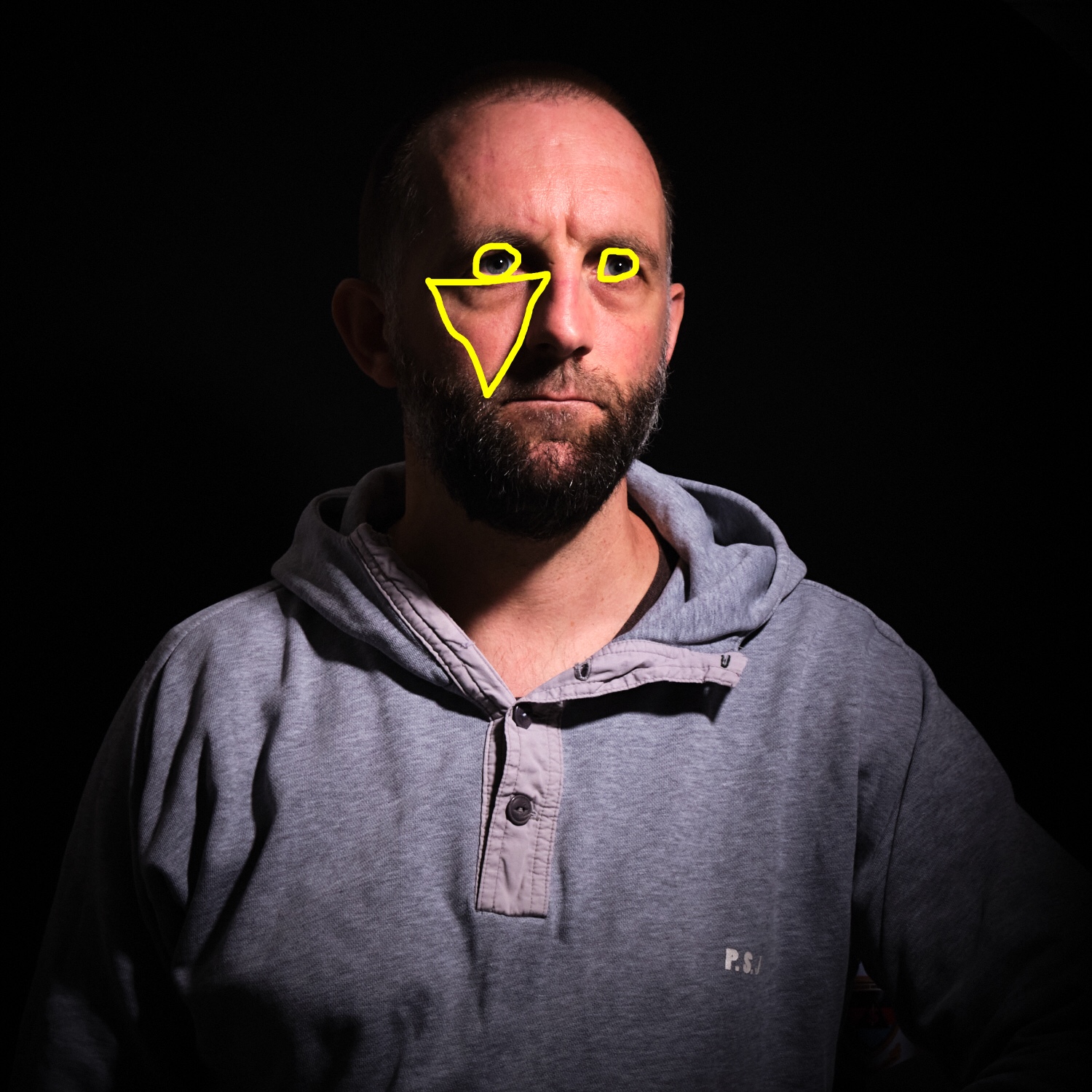
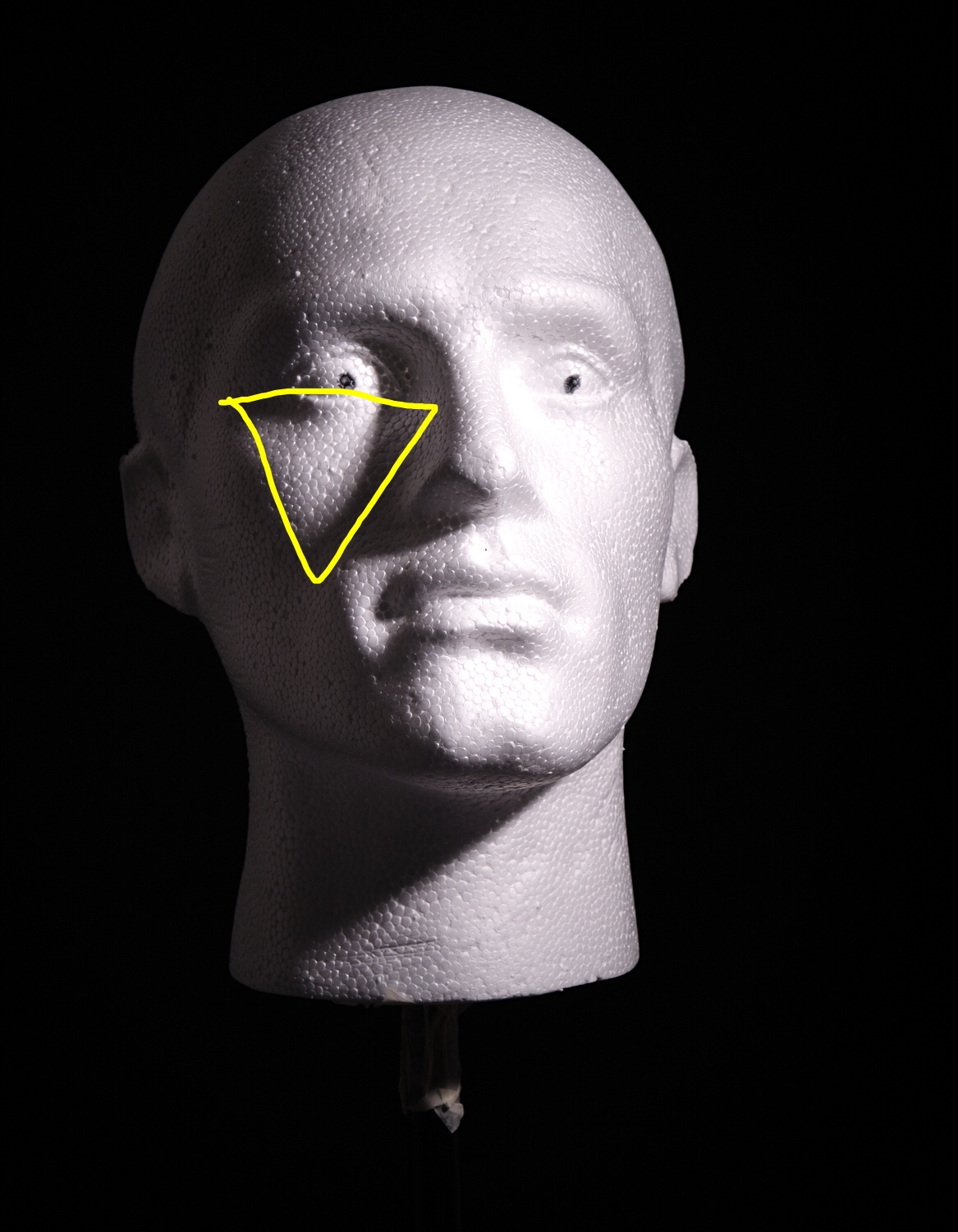
Learning how light falls on the face or a stand in face.


Rembrandt triangle 


Playing with height, position and strength of the light source. By placing the modelling light above the subject and off at a roughly 45 degree angle, it’s possible to achieve the desired Rembrandt lighting see above image of my model Poli Head.


trainagle and light captures in the eyes 


More reading a trail and error before the final assignment. The above image is in a square crop ratio, this may well be a workable ratio to use for a triptych A3 picture.

20200426-Reading Photographs

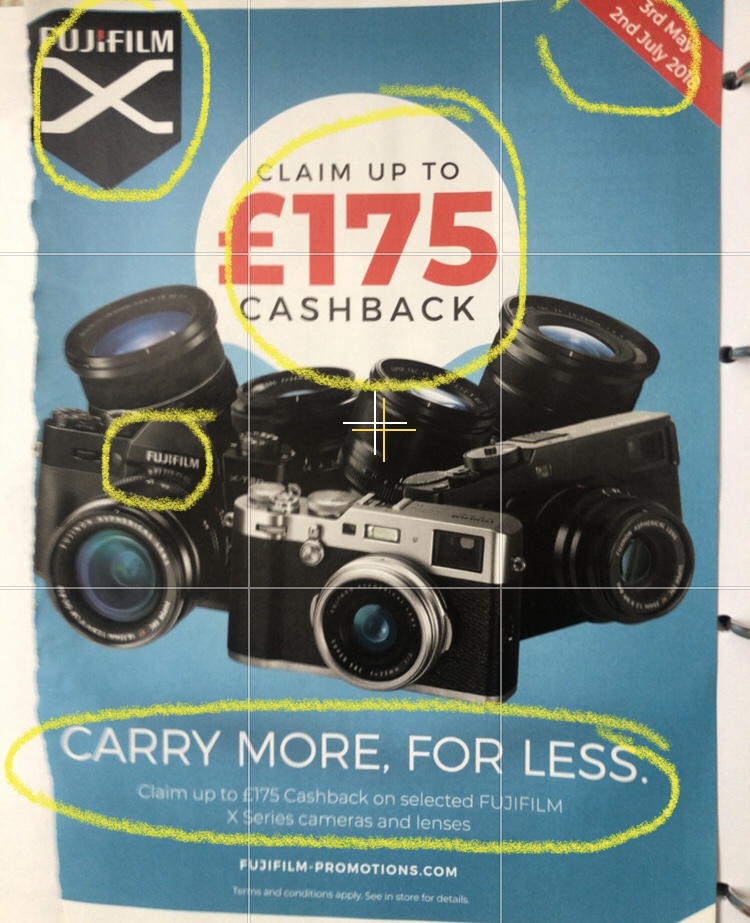
Not having many magazines or newspapers around the house was quite a challenge in itself. I’ve not brought a paper or magazine for sometimes now. See date in the top right of Fujifilm advert above.

They aren’t something I’ll buy anymore. They have more adverts than articles at times and your paying for pages of adverts a more than articles on something you are interested in.

The above advert for me has been pretty successful since buying Fujifilm camera and lenses in recent years from being mainly a Nikon user.

The Studium = The main picture of the camera and lenses

The Punctum = £175 Cashback

  • Rule of thirds
  • Language with Brand on the camera and lenses reads left to right.
  • The brand is in the top left corner.
  • The massive claim of cashback on the top third.
  • Use of CAPITAL LETTERS (carry more for less).
  • Three cameras but four lenses.
  • Majority of the cameras and lenses are the black variants on a subtle blue background.
  • Simple colours that do not confuse the eye or let you wander through the advert.

”Photography for me is not looking, it’s feeling. If you can’t feel what you’re looking at, then you’re never going to get others to feel anything when they look at your pictures” Don McCullin, Sleeping With Ghosts: A Life’s Work in Photography

Bibliography

Short, M. (2011). Context And Narrative (pp. 120–141). A&C Black

20200423-Project 2 Reading Pictures-Diane Airbus

img_9229

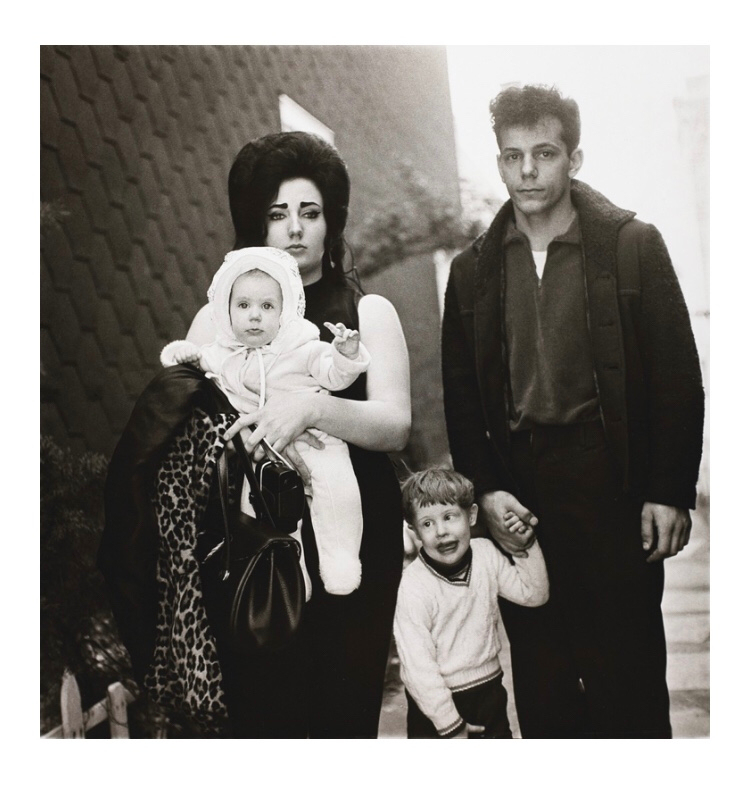
https://www.moca.org/collection/work/a-young-brooklyn-family-going-for-a-sunday-outing-nyc

From reading the article I found it harsh how the family has been describe by Liz Jobey. She doesn’t know them however she feels the the need to almost belittle them from the tone of writing.

I find the image has an strange feel to it. Not how the family has been set up but by how the Diane Airbus has composed the picture. The wife and child staring into oblivion and the father into what maybe the camera. The other child is said to be retarded which I feel from a personal perspective fairly instructive into a family that may have had a hard time prior to this.

Throughout the essay Jobey talks about them as they are nothing more than below her. I find that comes acroos in an annoying manner. I do not even know her and I myself are making a judgment on her writing about a picture and not the picture itself.

How you interpret a picture is true that first impressions count and don’t judge a book by its cover. Slightly off key with how Jobey has took to understanding this image.

Have they been forced to look unhappy or is this a case of they didn’t want the picture taken in the first place. It has that juxtaposition feel to it in a way of happiness meets sadness.

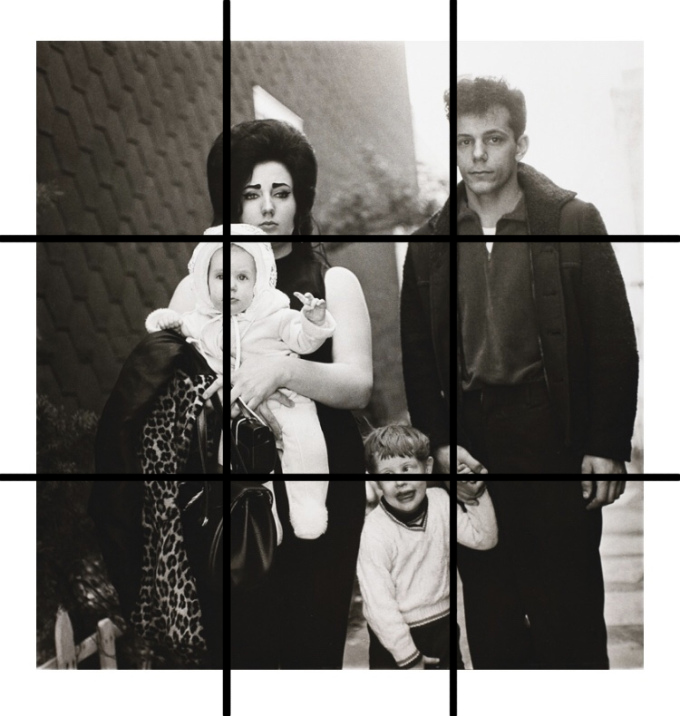
rule of thirds,reading images

Even though the critque on this image has been harsh from Jobey, the picture itself is pretty well composed when looking with the rule of thirds. The main subject as the women has a sense of drama with how she is lite, the DoP and sharpness of her compared to how he looks where he is probably set back slighty to her. personally I find this image has sense of the unknown within it. A hidden sense of beauty to it. Had this been in colour im not sure that youd be able to show it any better. The era of the clothes would have been dark colours, where only the whites and leapod print would have been able to give any punch.

Bibliography

(n.d.). A Young Brooklyn Family Going For A Sunday Outing, N.Y.C. Retrieved April 23, 2020e, from https://www.moca.org/collection/work/a-young-brooklyn-family-going-for-a-sunday-outing-nyc [assessed 230420]

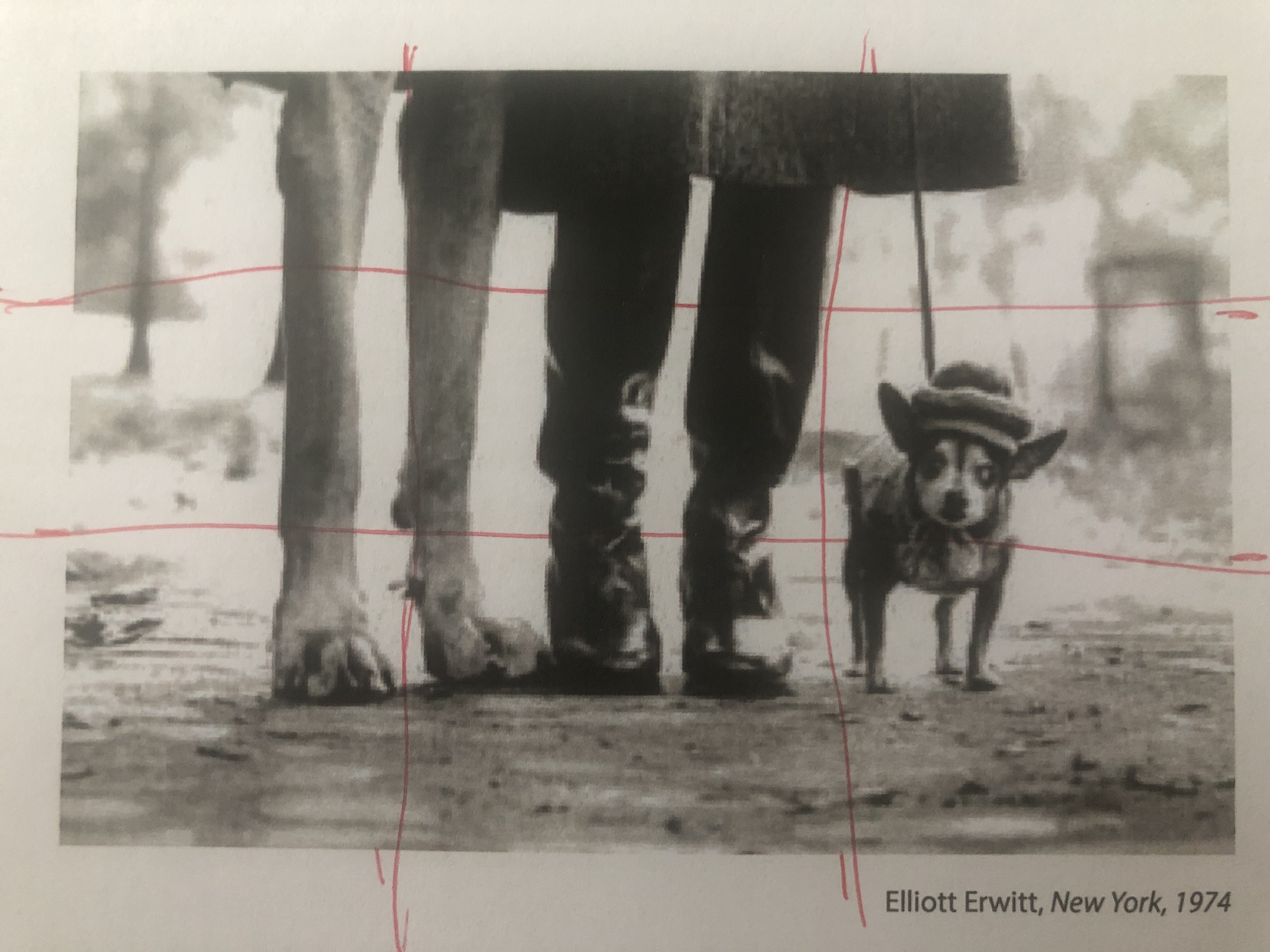
20200423-Language of Photography-Ex Elliot Erwitt Dogs

  • Having looked through some of his portfolio of his Dogs series some for me stand out for the same reasons like this one.
  • Nearly all his pictures are from a point of view from the dog’s eyes almost like he’s taking portraits of them.
  • They are compositionally correct with the rule of thirds this image in particular. The giant dog on the left third, the human boots in the centre and smaller dog on the right hand third.
  • The depth of field shows that a shallow DoF has been used to isolate the main subject and blur out the background. Minimising any distractions.
  • Three subjects evenly spread across the composition fills the frame had it been two I doubt this would have been a user.
  • It has a sense of wealth to it: the large dog and small dog together and the owner in the middle. More than likely taken in the Central Park area where some may say is quite an affluent area. The smaller dog is wearing a jumper and hat, probably as is the owner.
  • The PoV from ground level makes the image with how it has been cropped just above the knee and body of the larger dog.

The image initially shows a sense of fun as do other images within the series. I see him as a dog lover. It also give you a chance to guess what the other breed of dog is and how the woman looks.

20200415-project 3 Self-absented portraiture-exercise

Go to the artist’s website and look at the other images in Shafran’s’s series.
You may have noticed that Washing-up ​is the only piece of work in Part Three created by a man. It is also the only one with no human figures in it, although family members are referred to in the captions.
In what ways might a photographer’s gender contribute to the creation and reading of an image? Gender I wouldn’t have thought has anything to do with it. Had it not given you his name in the workbook I wouldn’t have thought twice about if it was male or female or whatever gender someone chooses to use in today modern world.

What does this series achieve by not including people? I think it has a sense of ambiguity going on in the series. Had this been taken during these few weeks while parts of the world have been in isolation/lockdown then I think it would show a side of life that a lot of people are witnessing today. There are a few images I like where light has been used or could have been used to create some abstract paintings.

Do you regard them as interesting ”still life” compositions? I think its more still life. Some have an abstract kind of feel to them when others look like a photo diary insert that someone did the washing up today and they are proud of it. Slightly tongue in cheek feel. It would be something I would send to my wife when I’m on leave to wind her up like I’ve done the washing but not separated the colours just chucked it all in. Then send her a picture to prove it.

The three images above are something I would do whilst I’m home in isolation playing with how light comes into the house.


Bibliography

(n.d.). Nigel Shafran. Retrieved April 15, 2020a, from http://nigelshafran.com/ [assessed 20200415]
(n.d.). Washing-up, 2000 [2000] : Nigel Shafran. Retrieved April 15, 2020b, from http://nigelshafran.com/category/washing-up-2000-2000/ [assessed 20200415]