After reviewing the idea and asking on the student forums for help, several students suggest the newspaper club and how to make a zine. I had seen this mentioned on the forum in older posts. The issue I have with it is costs and how many you need to produce to bring the price down. I don’t think it is worth the money for what will be a short gain.
I used Lightroom and book module to produce the layout. Something I had not used during assignment three, where I used pages app through the Apple software. Its slightly harder to master, although I have found a Youtube tutorial on this. I’ve just stuck to a simple layout while I try to establish how best to achieve this. I must admit I’m relatively pleased with the first attempt. The fact that it has been printed on cheap recycled paper and using a standard printer it has a rustic feel to it like you’d expect from a cheap magazine or a newspaper pull out.
If the assessment is not digital and we send prints, this would compliment the final prints with a small zine.
Assignment four has taken the wind out of my sails, to be honest. I’ve taken my tutors advice and received some assistance from the student help and received some useful links.
At times it’s wise to slow down reflect and establish your weaknesses and address your areas of concern. For me, it’s clear mine’s academic writing. I’ve been trying to recall when if I was ever taught how to write an academic essay.
I’ve invested in a few new books and looked at the Open University free courses in the essay and critical writing courses. The online forum has various links to sites and apps to use. These are all going to be of assistance in the long run if I’m going to continue this course.
I’ve recently found this BBC Two clip of Gregory Crewdson setting up for a series of images. The size of his team is outrageous. This isn’t what I thought he meant by a team. This is something like id expect to see on a Netflix film. He doesnt even take the picture himself. Not sure in. my eyes how he can be called a photographer, is this not a visual maker or something.
He has the vision I presume to see the compositions and how the lighting is used but, on the other had he has a touch up team editing the shot, which I guess a lot of professional photographers have but I presume they are behind the camera at least?
The clip goes on to mention that this particular series he was constructing was going to sell in regions of $60K to potential sellers. I wonder how much it cost to construct these series. Closing a street, turning the lights off, cost of the production team and kit, wages for the guy that takes the picture, etc.
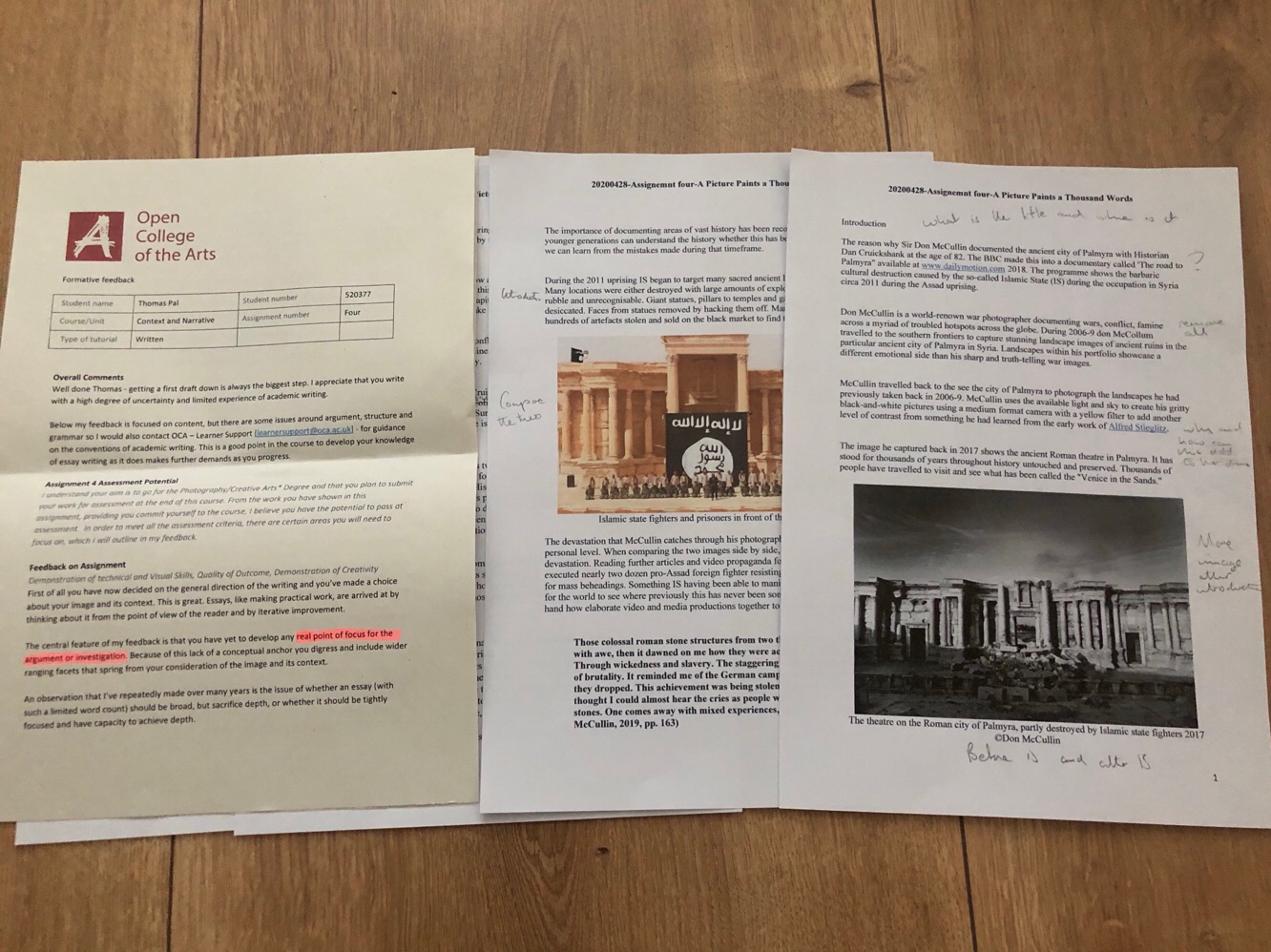
Looking back now, I should have waited and thought about this assignment before submitting my draft. With both the feedback and the essay, I now see, I’ve not made the connection with the pictures or managed to construct any form of argument.
What I thought I would have received was an essay with red pen all over it, which is what I’ve sort of done now (pencil not pen).
It needs a total scrub and rewriting from the beginning; I can see how the introduction starts and how I can place in a lived personal experience through the writing. If I can find a previous image that McCullin has taken of the theatre I can use this to illustrate the practices of Rephotography.
It has to be said it wasn’t what I thought I was going to get. This part of the course has been on my mind since first reading the course workbook. An essay!
I can’t recall the last time I have had to write an essay let alone thought about writing one. Although my tutor has praised me for making the initial step in writing a draft. I had absolutely no idea how to construct it in the first place. The areas I looked have probably steered me in the wrong direction, possibly the image I choose should of been one of the others I could have related to far better with my own personal and lived experience.
The tutor comments on how I haven’t developed a real point of focus for the argument or investigation. Looking back now I agree but envisaged this was just a draft and I would be told where I’ve gone wrong. Which I have really in the feedback, I just hadn’t thought it would have been like this. It proves that I need to look at how to construct an essay and not listen to my dad! (he thought it was pretty good and found it interesting, don’t listen to him again).
Strengths
Areas for development
You took the important step of starting and have written a decent draft
Once decided maintain your focus on your particular argument/ investigation/hypothesis
You demonstrate passionate investment in this work
Keep a good critical distance and don’t let the emotional impact of this ideological conflict impact too much
I have emailed the student help in regards to academic writing, funny how I look back to when I left secondary school to take the new journey into the military id never have to use anything educational in latter life. How wrong am I now?
Give me a set of patrol orders and a back brief with a patrol report, that is an easy task. This part has truly taken me outside and beyond my comfort zone. I now have time to look to review this assignment, wait to see what the student learning sends. Then attack this again.
At times I haven’t been great with criticism, however, this has hit home and if I’m being honest with myself do I have what it takes to continue with this course.
The reason why Sir Don McCullin documented the ancient city of Palmyra with Historian Dan Cruickshank at the age of 82. The BBC made this into a documentary called ‘The road to Palmyra” available at www.dailymotion.com 2018. The programme shows the barbaric cultural destruction caused by the so-called Islamic State (IS) during the occupation in Syria circa 2011 during the Assad uprising.
Don McCullin is a world-renown war photographer documenting wars, conflict, famine across a myriad of troubled hotspots across the globe. During 2006-9 don McCollum travelled to the southern frontiers to capture stunning landscape images of ancient ruins in the particular ancient city of Palmyra in Syria. Landscapes within his portfolio showcase a different emotional side than his sharp and truth-telling war images.
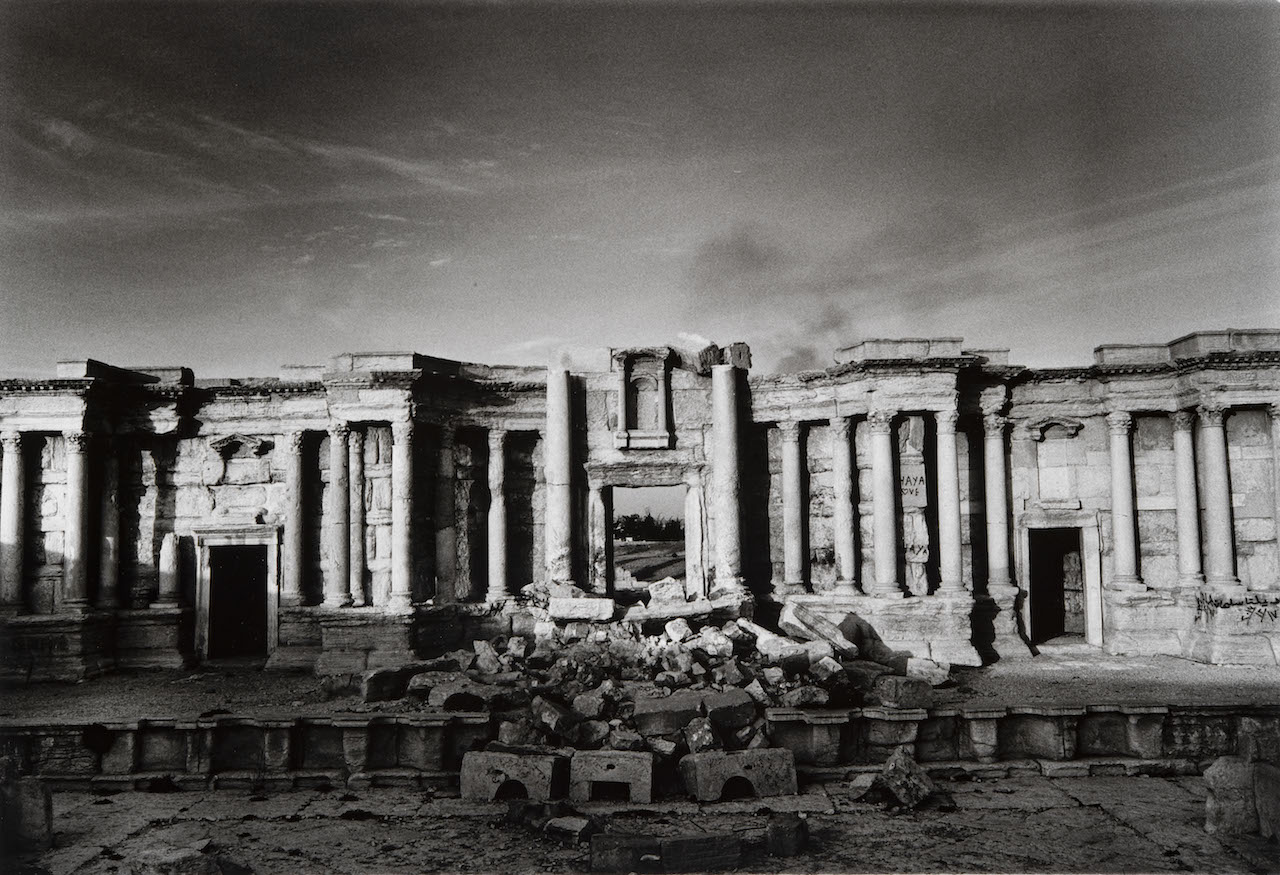
McCullin travelled back to the see the city of Palmyra to photograph the landscapes he had previously taken back in 2006-9. McCullin uses the available light and sky to create his gritty black-and-white pictures using a medium format camera with a yellow filter to add another level of contrast from something he had learned from the early work of Alfred Stieglitz.
The image he captured back in 2017 shows the ancient Roman theatre in Palmyra. It has stood for thousands of years throughout history untouched and preserved. Thousands of people have travelled to visit and see what has been called the “Venice in the Sands.”
The importance of documenting areas of vast history has been recorded for decades so that younger generations can understand the history whether this has been good or bad and how we can learn from the mistakes made during that timeframe.
During the 2011 uprising IS began to target many sacred ancient locations throughout Syria. Many locations were either destroyed with large amounts of explosives turning them to rubble and unrecognisable. Giant statues, pillars to temples and gateways pulled down and desiccated. Faces from statues removed by hacking them off. Many of these ancient ruins had hundreds of artefacts stolen and sold on the black market to find the IS propaganda regime.
Islamic State fighters and prisoners in front of the Black flag of IS
The devastation that McCullin catches through his photographs calls upon the emotions on a personal level. When comparing the two images side by side, it becomes visible from the devastation. Reading further articles and video propaganda footage on articles how IS executed nearly two dozen pro-Assad foreign fighter resisting IS. The theatre became a stage for mass beheadings. Something IS has been able to manipulate propaganda to the media for the world to see where previously this has never been something the world has seen first-hand how elaborate video and media productions together to strengthen the IS Caliphate.
Those colossal roman stone structures from two thousand years ago filled me with awe, then it dawned on me how they were achieved. Through cruelty. Through wickedness and slavery. The staggering accomplishment was a product of brutality. It reminded me of the German camps where people worked until they dropped. This achievement was being stolen from me as I looked at it. I thought I could almost hear the cries as people were crushed under those huge stones. One comes away with mixed experiences, and they’re valid feelings. (Don McCullin, 2019, pp. 163)
McCullin has a way of compositing and capturing the environment in one take, the depth of field created draws the viewer into the image by not just by looking at it but being able to feel the emotions; he felt.
Throughout this course, we have looked at how an image can be manipulated or staged to provide a scripted narrative. Had images like this not been captured showing vast destruction and devastation IS would have been able to capitalise their advantage, promoting an ideology through IS media channels. Distribution of fake news and destroying what true Islam is.
By documenting what atrocities during the conflict in war, the world can see a snapshot of reality. When watching the road Palmyra online, McCullin’s still images hold the viewer in a gaze far better and watching the documentary.
During a documentary, both McCullin and Cruickshank present both the feelings and emotions during the visit. During one-part, Colin takes a picture from the top of a bombed-out building looking out towards a mosque. Surrounding buildings as far as the eye can see are either rubble or fallen down. The mosque is shimmering in the late evening sun just before it starts to set.
To the latter part of the film, McCullin meets two brothers whom the father was taken from them, beheaded, crucified and hang for days for everyone to see and stray animals and vultures to eat the decaying headless body. His head in one place his body in another. Islamic burial is within twenty-four hours; the bodies positioned so that the head is facing towards Mecca. Something the family was not able to do. McCullin’s emotions are visible during this meeting. Witnessing things like this have been part of his career for years. He has seen things where others can only imagine sight or emotion.
Arguably it is just a picture of an ancient Roman ruin. From the bottom of the picture through to the skyline emotions can be felt. Darkness surrounds the stage, an area where something dark has taken place. The main wall behind holds a structure of importance status. It has provided IS with the perfect backdrop for those mass executions.
Conclusion
Frompersonal experiences of combat in arenas where terrorist organisations or waring factors have destroyed areas of land or historical locations that have been vital for the so-called war effort, pulls emotions that at times are hard to explain. Documenting these times in snapshots were able to prosecute them for the actions or war crimes they have committed. Cruickshank makes a point about being able to rebuild the city to its original state, mainly down to people like McCullin that have photographed the city well before IS occupation and destruction. Although it will not be the same, however, the question now, is this worth the rebuild as IS will be no more at some point?
A picture does paint a thousand words in this case. Better to still have great pictures of what it was to have no pictures at all.
Bibliography
Baker, S. (n.d.). Don McCullin (pp. 163–164).
Channel, E. (1970, January 1). The Road To Palmyra – Video Dailymotion. Dailymotion. Retrieved April 30, 2020, from https://www.dailymotion.com/video/x6jaqa4 [accessed 300420]
• Do you think there is more to this work than aesthetic beauty?
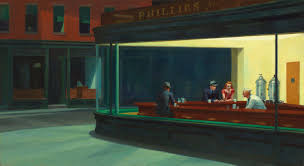
I have to say I’ve watched a few clips of his work; nearly all have a cinematic feel more than a photographic feel. I have to say I don’t find his style has much of a connection to me. Stage manage photography doesn’t do anything for me. I find it incredibly dull. There is a dark side to his images where I dont think I want to find out why. Some remind me of the Sky Atlantic TV series called Ture detective which covered crimes of a serial killer with a messed up killer and mentally challenged detective. Although some remind me of Edward Hooper’s paintings of Night Windows and Offices, Crewdson does go into to mention his work during the second clip.
• Do you think Crewdson succeeds in making his work ‘psychological’? What does this mean?
I found elements extremely hard to grasp and understand what it is he’s trying to portray to the point I find slightly disturbing. It might just be me. I just don’t get him. I find him a little confused. You could say he’s trying to show his mental state with these pictures however I’m not sure i would like to find out his mental state.
• What is your main goal when making pictures? Do you think there’s anything wrong with making beauty your main goal? Why or why not?
I’ve always tried to find something of beauty within a composition before it becomes a picture. Applying rules and how light, dark, shadows and subject are used will ultimately be your final piece. I like to think that a combination of those elements becomes the beauty of a picture. Why else would you take it. Beauty is, however, subjective as with everything else. It’s how you show that I feel. Crewdson’s work must have an element of beauty I see that in how he lights his pictures with that strong cinematic feel to it. I’m not looking at the composition or the subject. I’m seeing how he’s used light to create that beautiful effect—light is needed in the first place to build a photograph.
The first clip I watch, the music adds a sense of drama to the images of darkness and unknown.
Biography
Crewdson, G., Photography, -, & -, P. (2016, April 3). Gregory Crewdson II – Photography – David Lynch.YouTube. Retrieved May 26, 2020, fromhttps://youtu.be/CrU9-KSHtdY [accessed 20200625]
in, P., & Crewdson, G. (2017, September 11). Photographers In Focus: Gregory Crewdson.YouTube. Retrieved May 26, 2020, fromhttps://youtu.be/BpIRm5BsXeE [accessed 20200526]
I’ve noticed this before during EYV links within the coursework don’t work or are not supported anymore.
I’ve raised this through the student help. Though nothing has come back. It’s annoying as your trying to find the correct piece of work and you end up watching something completely different. The link does say accessed 2014 we’re now in 2020 you’d think these would be updated and I’m probably not the only person to raise this issue. I sound like I’ve aged another twenty years. If you’re paying a substantial amount of your own money to get a degree you to expect the links to work or replaced.
This week I’ve gone back to work to start to understand how we will commence training again.
What have I learnt whilst I’ve been at home?
Routine is a must
Mental stimulation is a must
Only so much tv can be watched
Utilise what you have
Experiment
Learn about new techniques
Read
Look
Listen
Get outside with your camera
As I start to finalise assignment five, I wait to see how my initial essay draft comes back. Then I have time on my hands to finalise all assignments prior to the assessment date later on in the year.
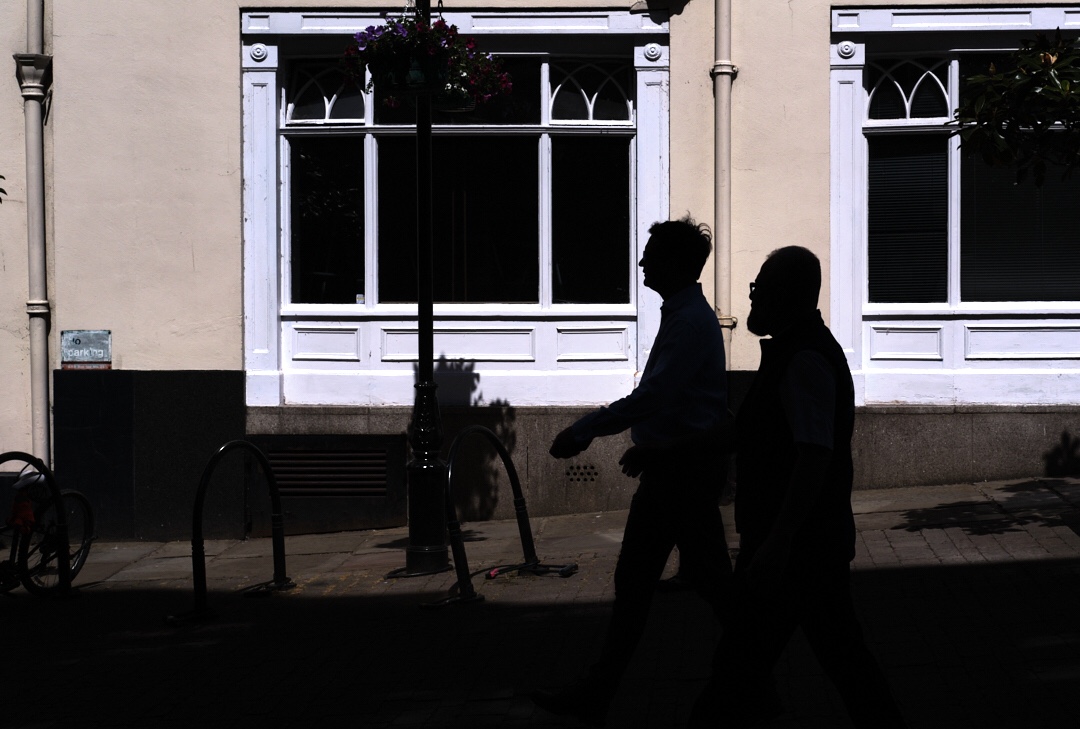
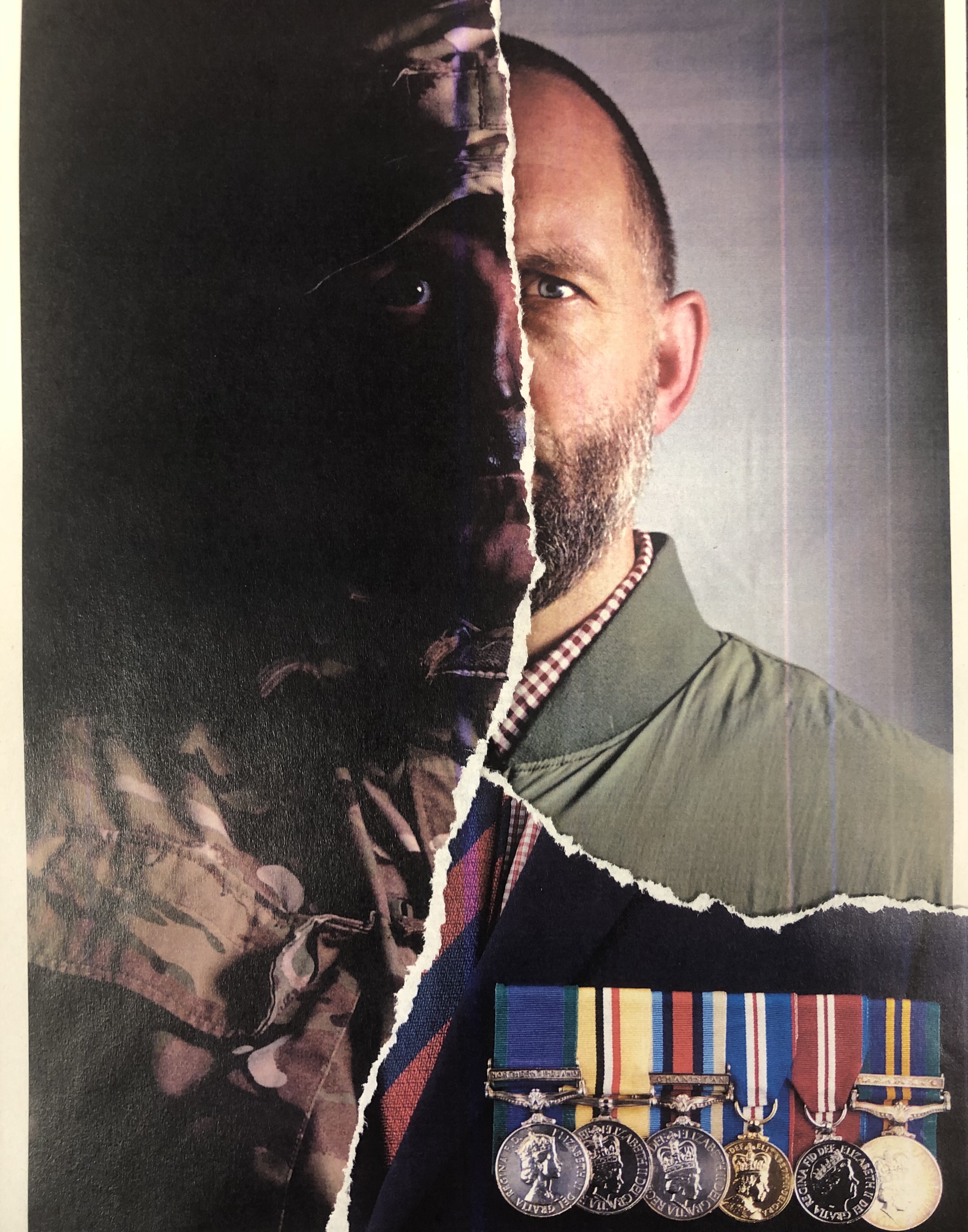
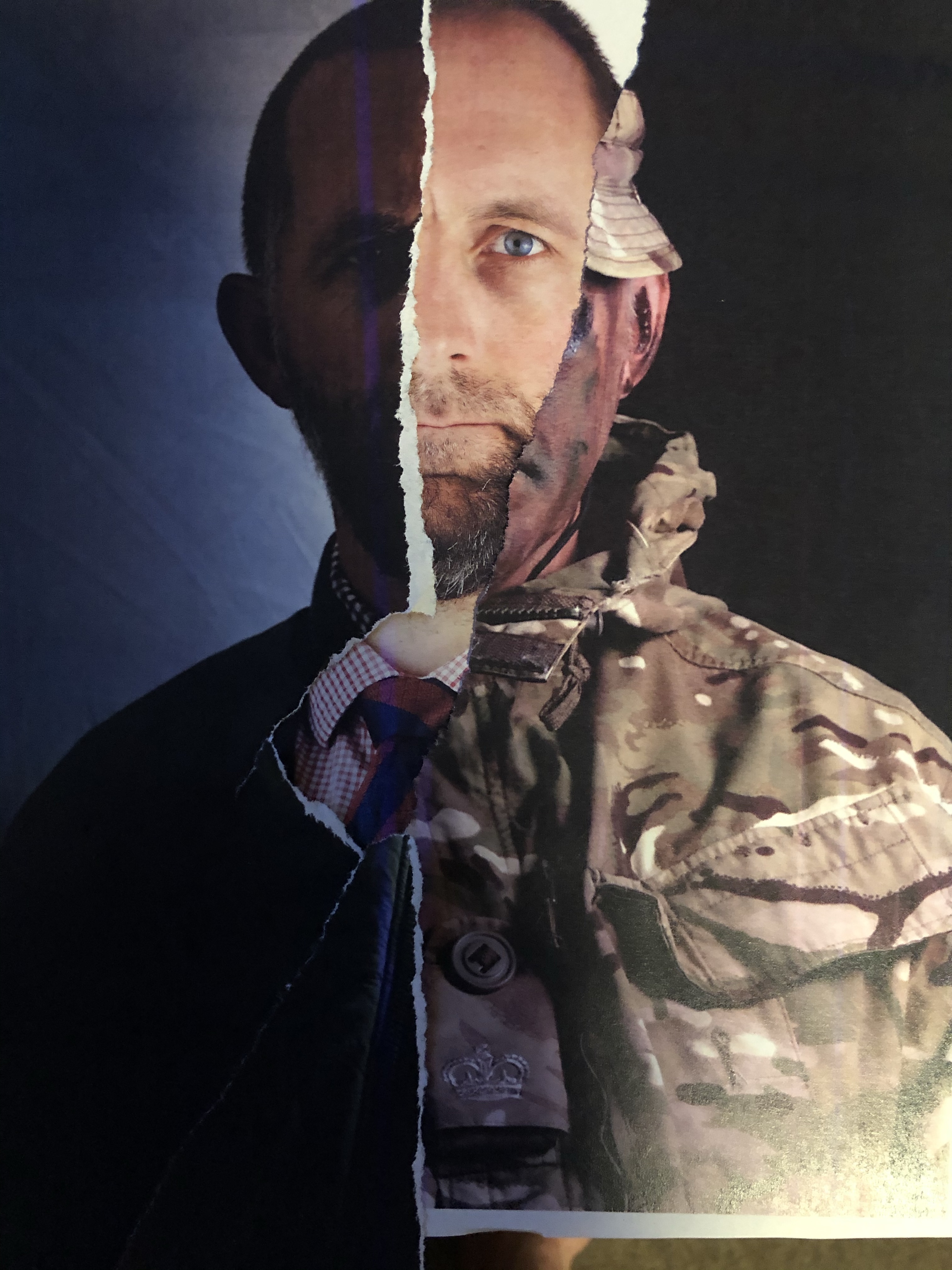
The idea of soldier civilian and veteran is coming together now. This is something that has been placed together by looking at how I can be different and at the same time adding a sense of the unknown into it.


 Part Two Context and Narrative BA HONS in Photography OCA