20200115-Assignment 2 Idea/Concept

Start by doing some reflecting in your learning log. What kinds of subjects might be seen as un-photographable? How might you go about portraying them using photography?

OCA course book Assignment two.

Looking at this an idea that comes to mind and could argue it’s in vogue at the time, although I hate to say that term. A lot of people are jumping on the bandwagon. ”Mental Health” is what I’m relating too. It’s nothing new in my eyes it’s just more in your face today than it was said some ten years ago.

Everyone has some form of mental issues; it’s just how one chooses to let people know. Talking is the apparent answer though is probably the hardest one to achieve in today’s modern society.

The idea of seeing one’s self in an image looking wholly different and showing a side that is unphotographable will hopefully show what it is I’m trying to portray.
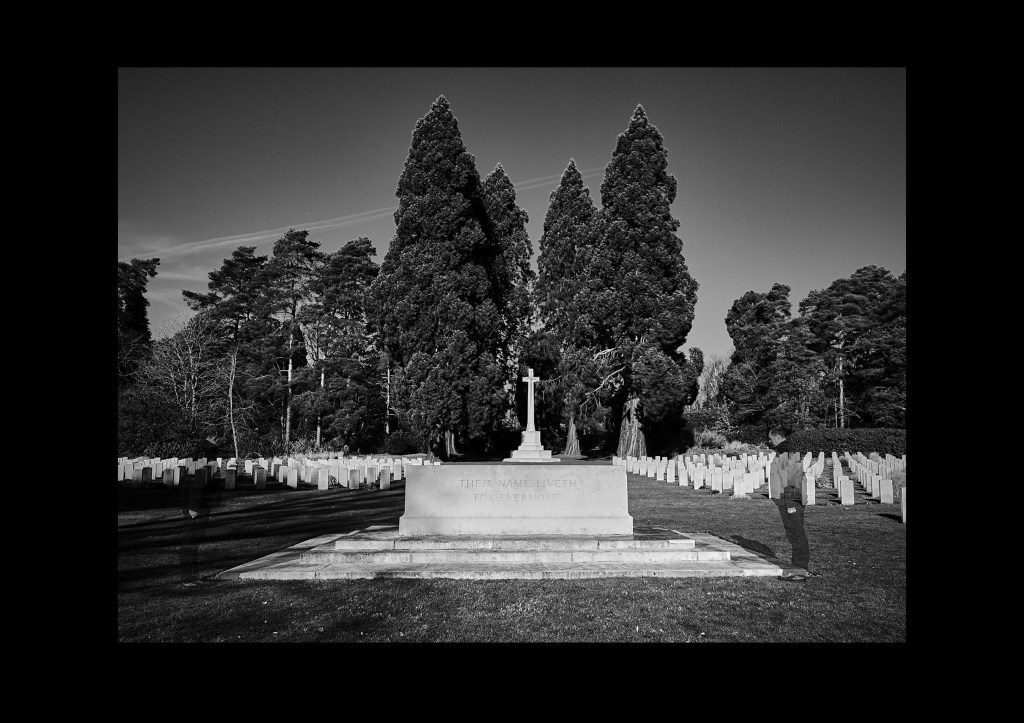
”Reflection on Life”

The idea has come from the image above. I’d need to take a few self-portraits in various guises for the concept to work. It draws from the previous exercise and projects with manipulation and telling a story.
20200212-Research-The Third Man

After reading my tutor feedback part on suggested reading, I noticed Carol Reeds (1949) The Third Man.

Intrigued in why this was in the write up. I’d sort of known about the film but can’t say I’d ever watched it. More listened to my dad talk about it as a child. It was never on my list of films to watch.

After numerous internet searches only to find small clips and the trailers. I decided to rent it from a well known mobile phone company that lets you download or rent music, films and Tv programmes etc.

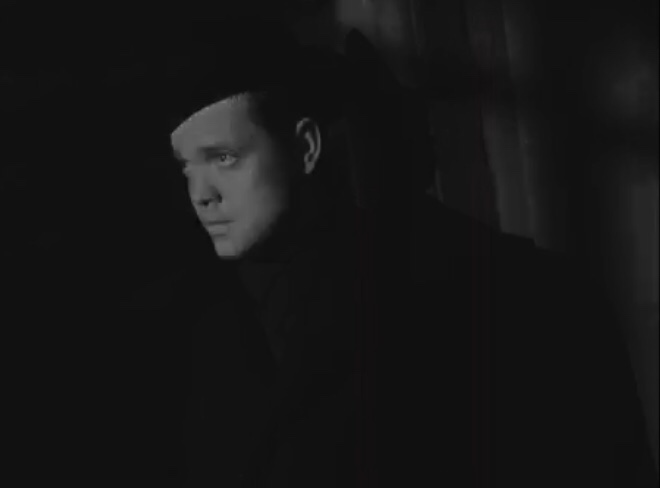
A classic black and white film. What took me by complete surprise was the use stunning cinematography. I can see way my tutor has recommended it. My style of black white photography and how some of the scenes of harsh shadows and strong shapes. The use of negative space, silhouettes great characters wearing hats and light hitting their faces at prime times in the frame. Fantastic to watch how light had been used.

Had this been in colour I just can’t see how the viewer would of felt. The music and light hold the drama and suspense on the set and frame. Like I had said before it wouldn’t have been a film I would watch. The images in the tunnel in the trailer the face that is revealed from the shadow. That’s is how I see my compositions at times.

Screenshot from The Third Man trailer

By waiting in the shadows yourself, you are at times waiting/fishing for that subject just to fall into a small sliver of light or come from the light into the shadow. Another area to look now for inspiration and ideas ahead of assignment two.

Bibliography

THIRD, T., Official, -, & Trailer, O. (2015, May 7). THE THIRD MAN – Official Trailer – Restored In Stunning 4K. YouTube. Retrieved February 12, 2020, from https://youtu.be/r9yyDEDGlr0

20200210-Research-John Hillard-Causes of Death

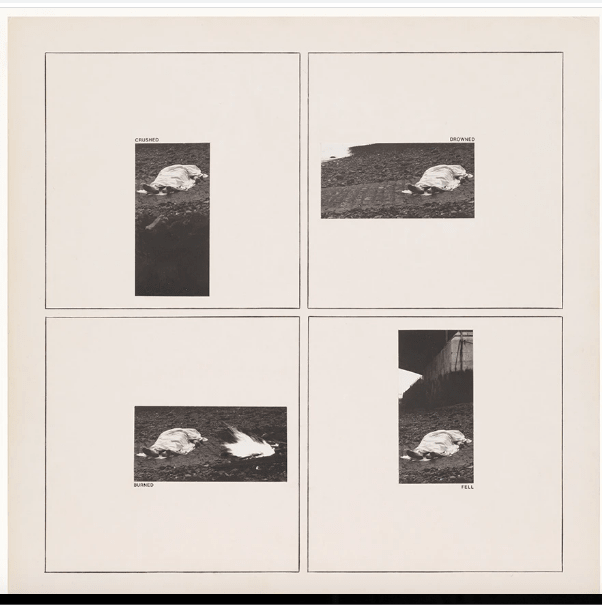
This was given in my Assignment one feedback to look at. Please the image below.

Screen Shot 2020-02-10 at 19.52.59
©John Hilliard, Causes of Death screenshot

Initially looking these four images quickly nothing stands out. However, once you slow down and start to analyse the images, things start to stand out. Yes, this was mentioned within the student feedback but you never see the images first time round. The titles do speak for themselves when you look closely, but without zooming in they are just four pictures of roughly the same thing.

It does ask the question of what is truthful. I find now in photography and in the news how an image can manipulate the truth. This has been going on for decades. Do we even know what’s real and what’s not? Fake news and the likes. Will anything we read to be true is what we are seeing true. How much of the daily life be manipulated to portray what we want to be true. When I think back in time what spring to mind for me is the luna landings the race for space. I’m extremely open to what people think happened then and the classic conspiracist ideas. The question I would raise now, “why hasn’t there been more than 12 walked on the moon?”

By changing the perspective you change the observer’s point of view (POV), you also changed the narrative to the image. I’ve seen this many times when the photographer changes the POV so that the viewer sees something else. How this changes the thought process of the viewer is by changing the experience the photographer is portraying in the image capture.

When I think back to what I provided in assignment 1. What is hiding in the shadows? By changing how the picture is edited in post and revealing the hidden parts of the image, yes I’m showing what hiding but I’m also revelling the hidden data in the file. This is what can be manipulated and pushed in the post edit.  Ansel Adams said.

Ansel Adam “You don’t take a photograph, you make it”.

Post edit in some ways can destroy an image in the non-puress eyes. Straight out of camera (SOOC) pictures are manipulated whether you like it or not. Consider what you have used the equipment used the camera settings you are manipulating the image from the start. The exposure triangle is this in its raw form. Freezing the action, DoF, ISO the way you are composing your image and set up. Controlling the light through exposure compensation to actually moving around with your feet and the time of day.

EmptyNameEmptyName 1

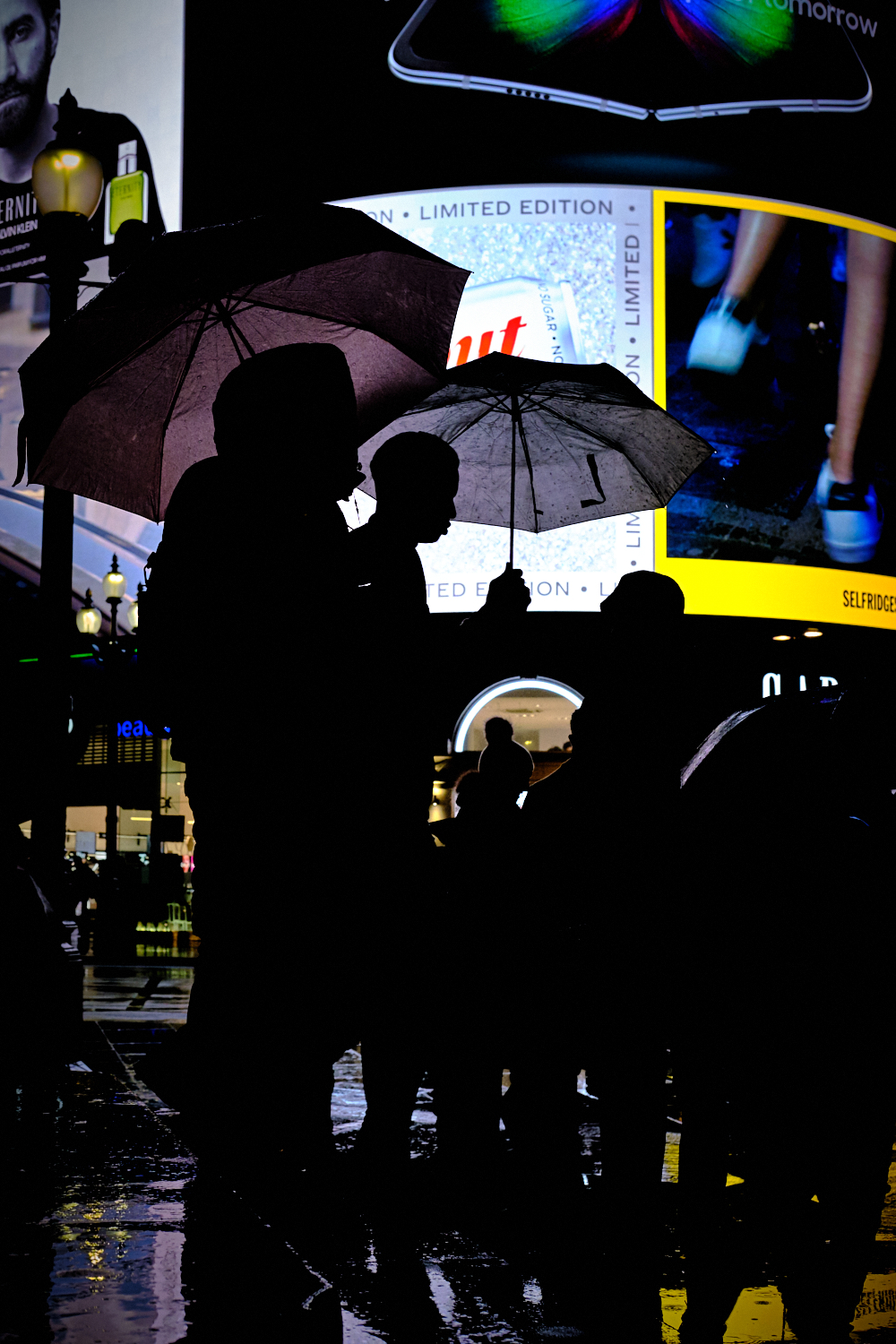
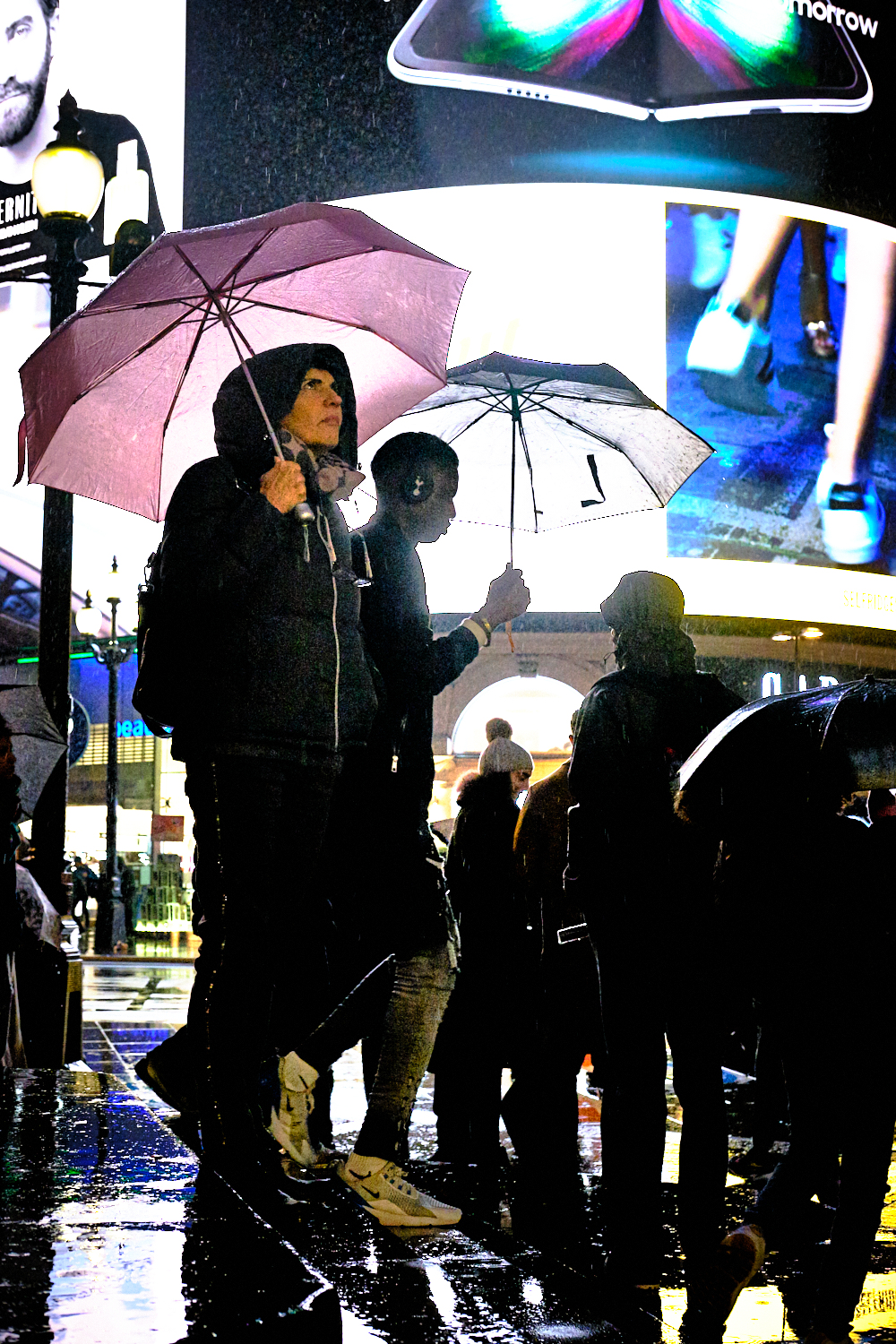
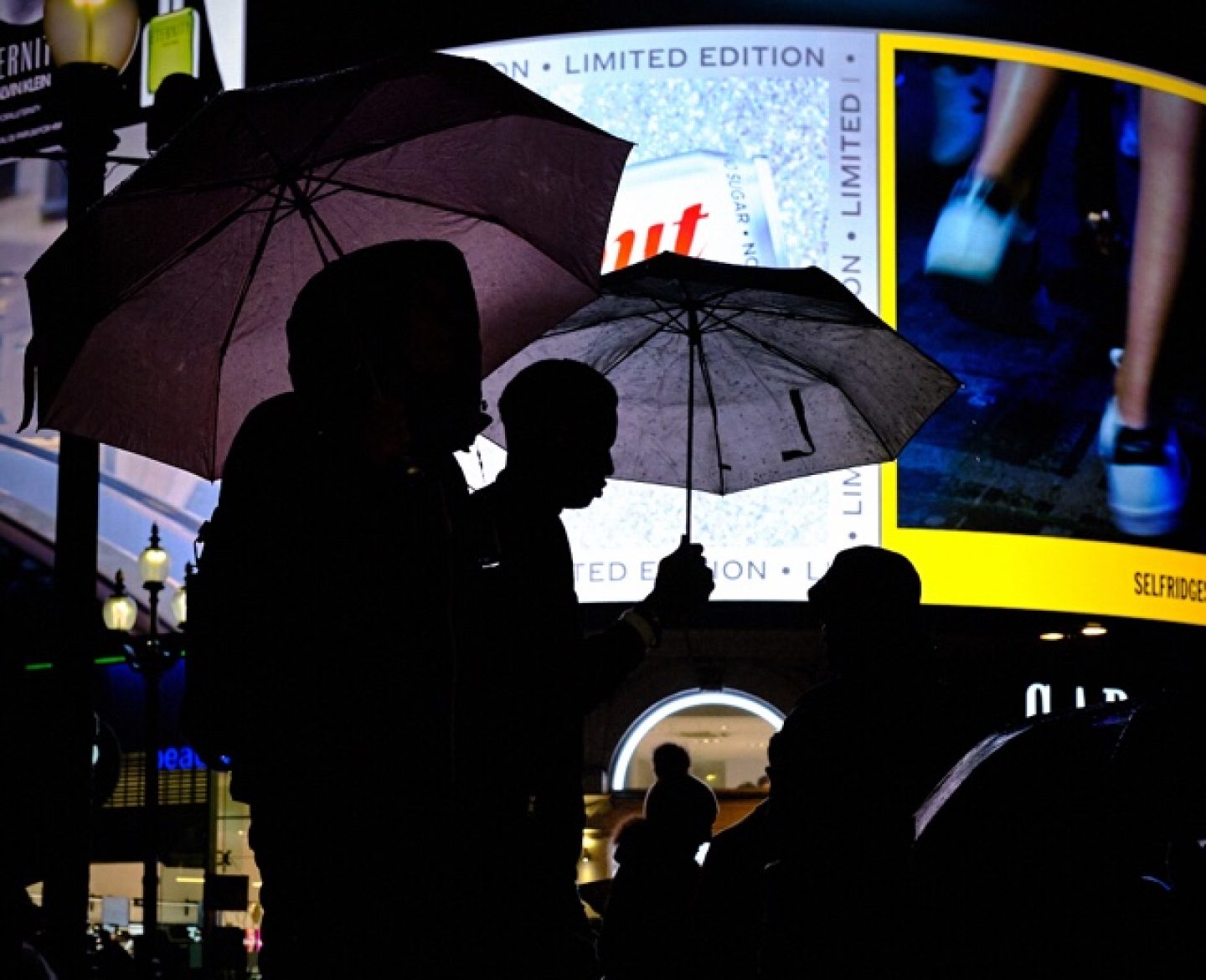
The two images above were taken in London on a wet winters night. The top one you can see I like to capture silhouettes and drama. With the bottom one, I’ve opened up the shadows increased the exposure where you can make out who they are. What one do you prefer whats the story being captured? Had this been exposed for the two people would this give the viewer something to be engaged with the photographer. Do the silhouettes against the bright neon lights hold the viewer in with what’s happening in this composition what is it the photographer what you to see?

20200210-Ass 1-Student Feedback

After some time I’ve finally received my assignment 1 feedback. Is it what I was expecting to read. I think yes. The initial brief is pretty open, the help from the discord group was just to get on with the assignment so that your tutor can get a feel of how you shoot and write.

I’d think from this I’m going in the right direction, it’s always helpful when constructive criticism is given and how I can progress from this. Always going forward and hopefully not backwards. As I’ve said in the previous exercises I find the learning curve itself a challenge both in both the mental side and defiantly the academic side. Writing has never been my strong point. I wasn’t very keen nor was my attendance during my teenage years at school. I’m now on that adult learning curve where I hope I’m learning all the time.

thomas-pal-assignment-one-feedback (3)

Points to work on

  • Add more to my introduction work
  • Research the idea both putting pen to paper
  • Change of language into a more critical analyst approach
  • Keep learning

20200209-New Book time

I’m a big fan of shooting Street photography predominantly in high contrast black and white. However, I’m always open to new ideas and seeing how different photographers challenge themselves.

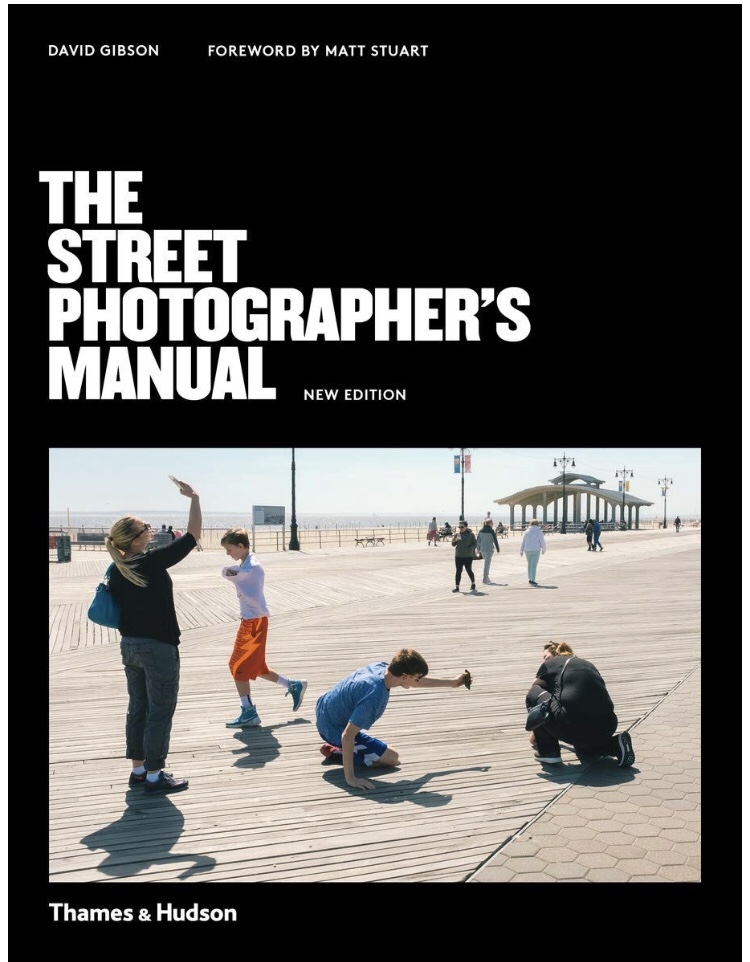
The Street Photographer’s manual (new addition by Thames & Hudson)

With reading other students problems with hitting the streets, I’d probably say this is an ideal book for those that fear the idea of shooting street whether this is from a candid approach or just having the confidence to shoot people without actually asking them.

Confidence is a hurdle in itself when shooting on the street. A friend gesture to whoever to shoot will generally help. Unless your taking it to the extreme in the likes of Bruce Gilden style then you have to be prepared for confrontation with your subject.

Remember there is no real law of taking pictures of people unless it’s of a military/site of sensitive nature. It’s a common-sense approach added to what you think is ethical.

Ultimately, I believe you have to walk the street and take pictures to learn from your mistakes. Practice, practice practice is the key to great images. Gone are days of 30 odd pictures with film. You can take thousands of pictures in a day depending on your memory card size and how many you use.

The Street Photographer’s Manual https://www.amazon.co.uk/dp/050054526X/ref=cm_sw_r_cp_api_i_sK.pEbZ8FVNW6

20200208-Project 3- Exercise-Peter Mansell


• Which of these projects resonates most with you, and why?

I found I could resonate to Peter Mansell project more than the others. I find photography a kind of mental therapy to keep the mind occupied and working. So many people suffer in silence in today’s modern world. I’m not a person that can let feelings go through talking unless it with people with common ground. Expressing one’s thoughts through photos for myself, I find easy and quite liberating at times.


• How do you feel about the loss of authorial control that comes when the viewer projects their own experiences and emotions onto the images you’ve created?

I see that as a compliment to the photographer more than anything else. I had some recent comments made on the images I took of graves from Brookwood Military Cemetery. I would say this is the same for both a written article, TV/Film productions. So many viewers can resonate to pictures with personal feelings.

I think to look at an image and not seeing anything that doesn’t resonate your not looking correctly or close enough.

20200207-Project Two- Image and Text-Exercise-Poem

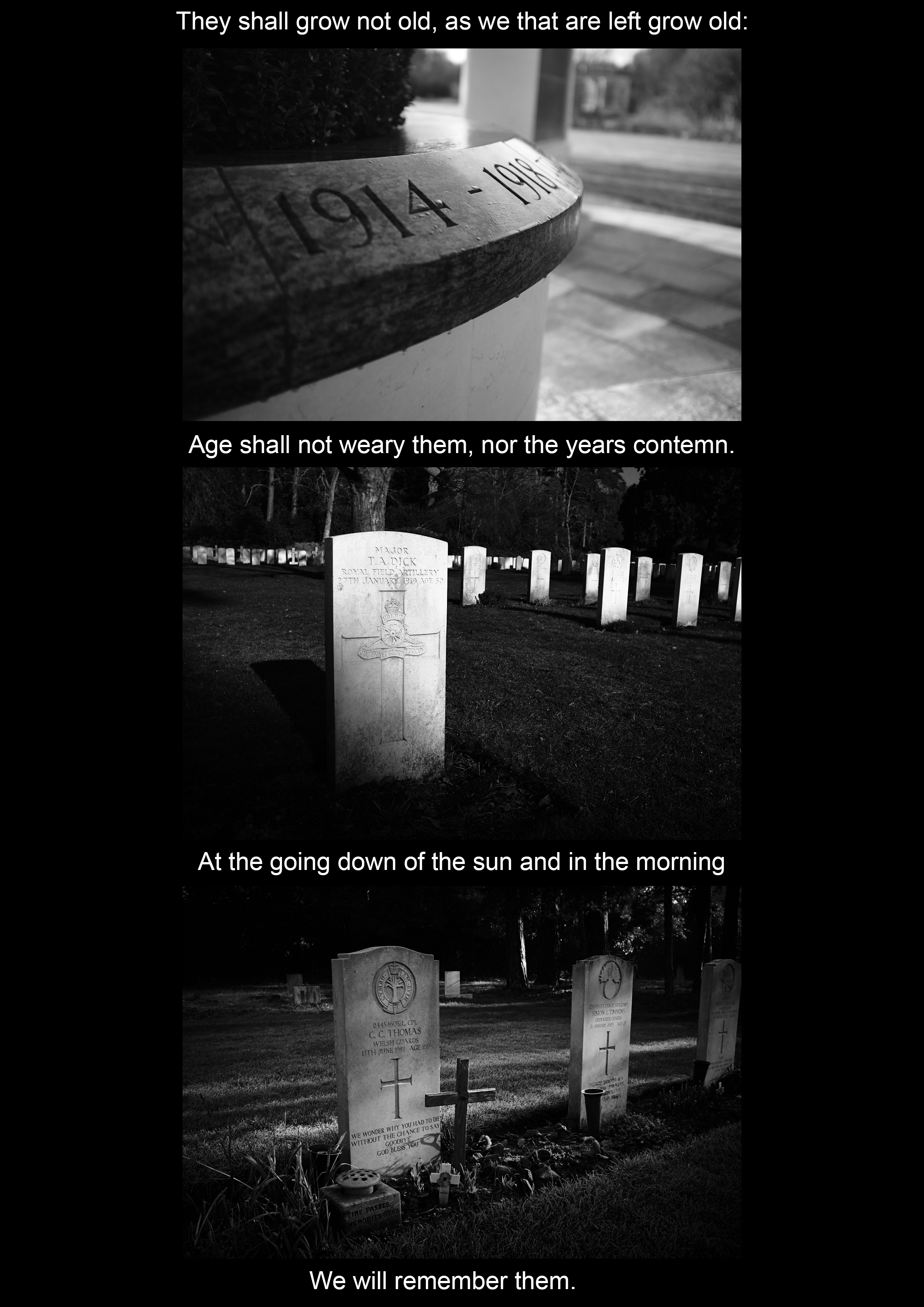
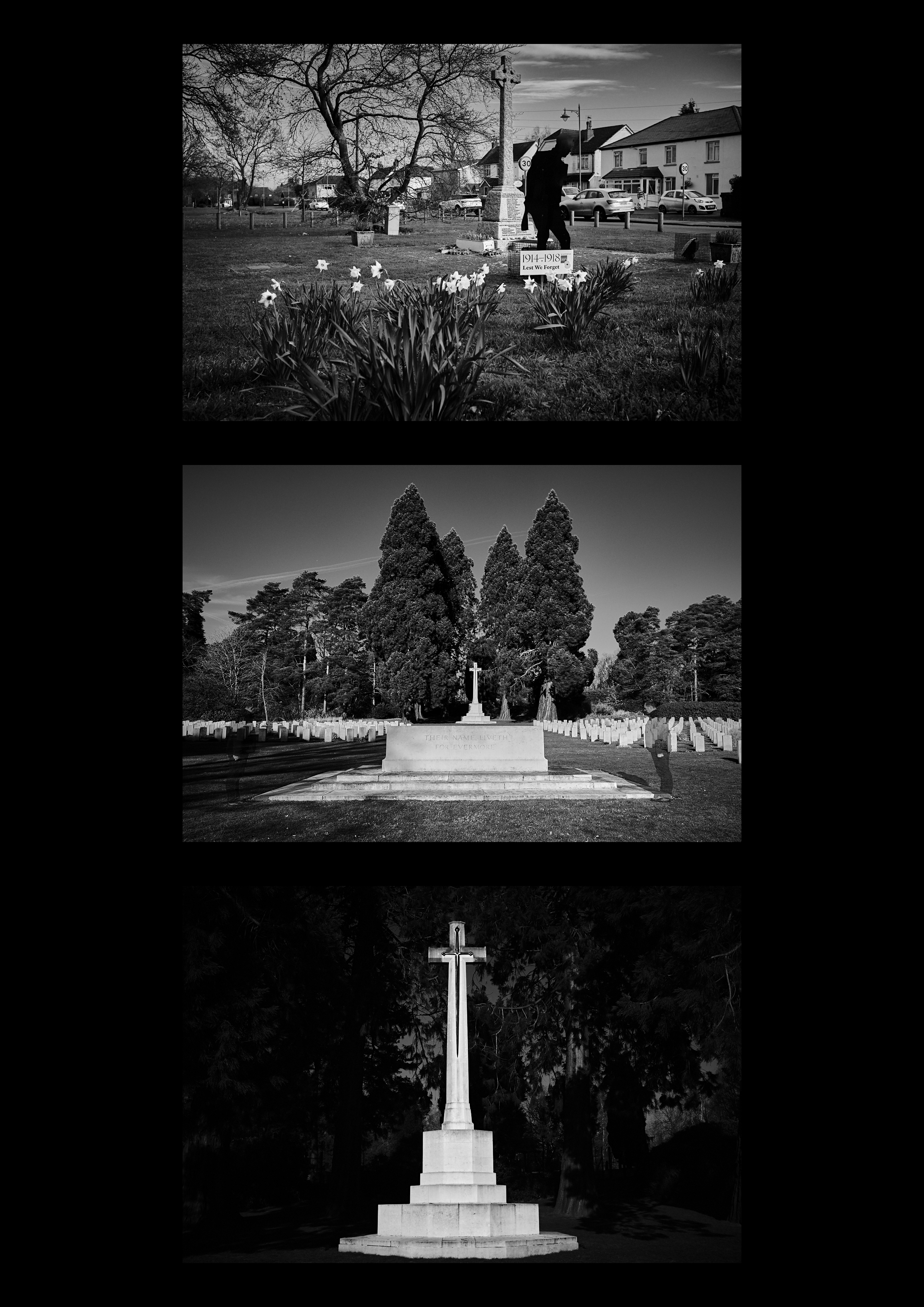
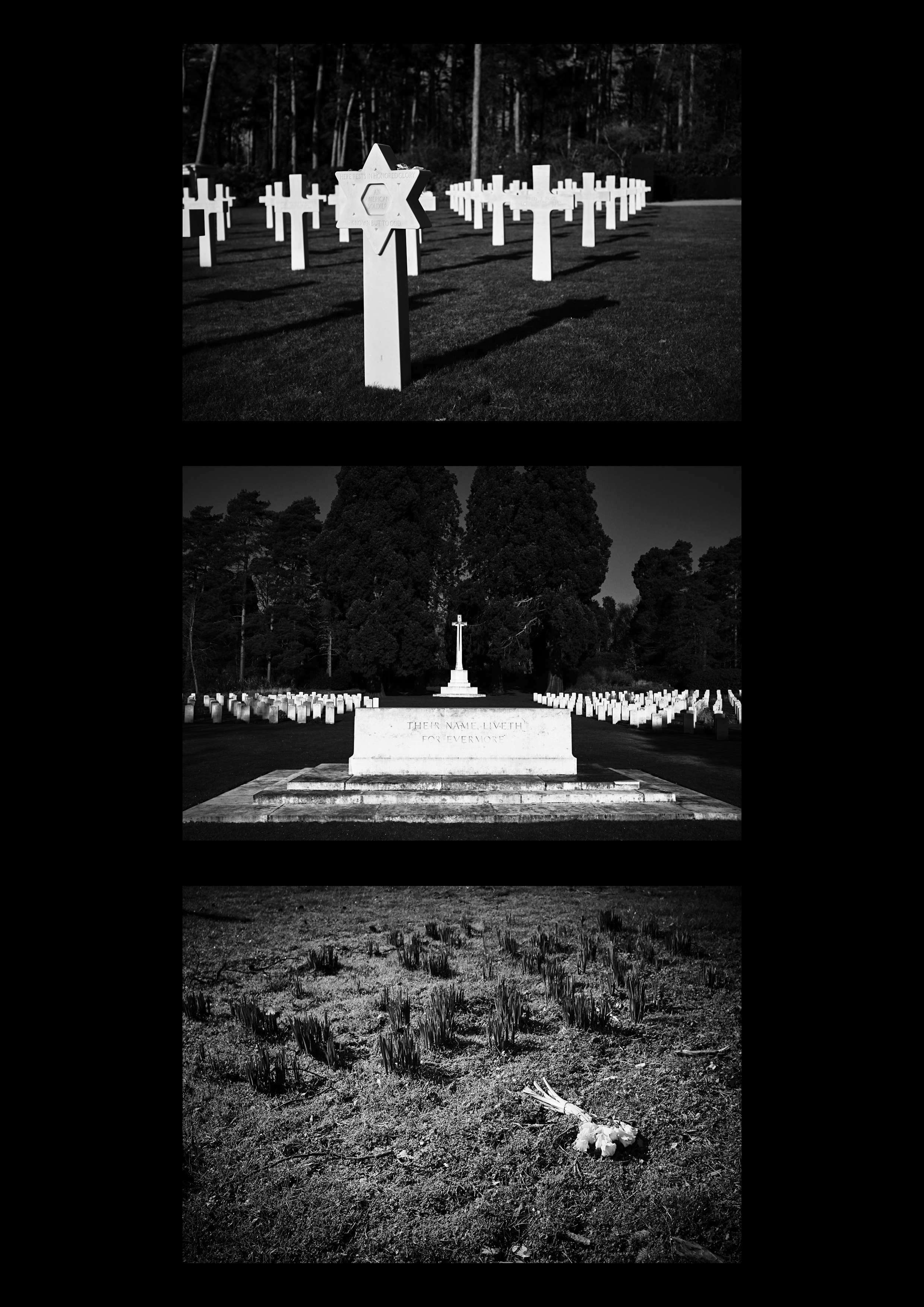
The aim of this exercise was to take a poem that resonates with you. For this I didn’t take a full poem but the part that sits deeply with me. The poem I have chosen is by Laurence Binyon’s “For the Fallen”

brookwood mil cem trip

brookwood mil cemt trip 2

brookwood mil cem trip 4

For the Fallen

With proud thanksgiving, a mother for her children,
England mourns for her dead across the sea.
Flesh of her flesh they were, spirit of her spirit,
Fallen in the cause of the free.
Solemn the drums thrill; Death august and royal
Sings sorrow up into immortal spheres,
There is music in the midst of desolation
And a glory that shines upon our tears.
They went with songs to the battle, they were young,
Straight of limb, true of eye, steady and aglow.
They were staunch to the end against odds uncounted;
They fell with their faces to the foe.
They shall grow not old, as we that are left grow old: 
Age shall not weary them, nor the years condemn.
At the going down of the sun and in the morning
We will remember them.
They mingle not with their laughing comrades again;
They sit no more at familiar tables of home;
They have no lot in our labour of the day-time;
They sleep beyond England’s foam.
But where our desires are and our hopes profound,
Felt as a well-spring that is hidden from sight,
To the innermost heart of their own land they are known
As the stars are known to the Night;
As the stars that shall be bright when we are dust,
Moving in marches upon the heavenly plain;
As the stars that are starry in the time of our darkness,
To the end, to the end, they remain.
The paragraph in bold is what everyone will know. I chose to use triptych for this exercise to show element within the poem. Agree there are some that repeat themselves but in a different narrative from the meaning of “They shall grow not old” by showing the varying ages and time frames from 1917 to 2009. The Sun casting shadows in the morning, remembering them.
Reflecting on this exercise, I had originally thought of using Rudyard Kipling’s poem “Tommy”. It is quite a lengthy poem with some complex issues. I had thought of using various locations by visiting the Brookwood Military cemetery and local cemeteries that contain military graves. If this was to be a further subject id travel further afield to the national arboretum in Stafford.
This may turn out to be an ongoing project and possibly an idea for assignment two once I’ve consulted my tutor.

Bibliography

(n.d.). For The Fallen By Laurence Binyon | Poetry Foundation. Poetry Foundation. Retrieved February 7, 2020, from https://www.poetryfoundation.org/poems/57322/for-the-fallen {asessed 20200207}

20200127-Project 1 Telling a story (exercise)

In this exercise, we are asked to read Bryony Campbells Dad project and the photo of the Country Doctor. How I have interpreted the two is merely from the images and the short sharp titles. I have to say they have some heavy emotional aspects to them, particular the images of the dying father.

I have not had to witness this, but have seen friends die in places I do not wish people to know about nor will I go into details. Its, not something I wish to repeat.

  • How does Bryony Campbell’s The Dad Project compare with Country Doctor?
    • From my perspective, Campbell’s Dad Project holds greater emotion within the pictures with a personal feel to them, although she is documenting the death of father in what I think is extremely brave. I’m not sure I could handle that. It is a beautiful way of remembering your father. Personally, I would prefer to remember my dad how he was not how you remember his last moments.
    • The pictures show two sides of emotion I believe. The physical and the mental-emotional sides. Seeing pictures like that, for me hit home to how lucky I am. Both my parents are still alive and well. Had this been my story I’m not sure I could find the right way of constructing such a strong story. I’m almost feeling like I didn’t want to know the outcome. However from the opening images shown you can work out what the outcome is. If you know what certain emblems on the paperwork are then you know what it is all about.

      BrionyCampbell_0195-1000x666
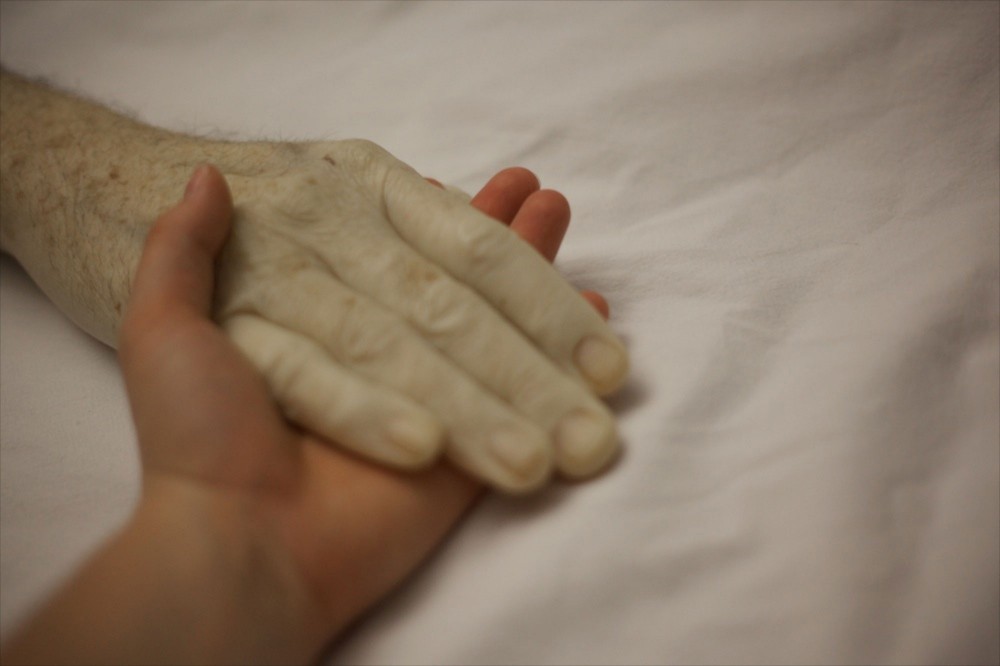
      Fig 1 Welcome to the End

      BrionyCampbell_0238-1000x666
      Fig 2 Me and Dad 25th August 2009

    • The above two images stand out as the strongest and most powerful. (lump in throat moment). Knowing what the Marie Claire Cancer care is and what is does speaks volumes. The second image of her holding her dad’s hand in such a cold, yellow state, you know exactly what has happened. When you have held the hand of a dying/dead person and seen death you know the exact emotion what is going through the person and what she is trying to capture and tell. Losing anyone is hard and emotional.
    • The Country Doctor for me is less emotional personally. But by documenting the life of what the doctor is doing its fairly similar to the above, less emotional personally without confusing the two. Yes, both stories show different sides, but both show areas where you see both sides of the story as mentioned above physical and mental emotions. 
    •  

      00767780.TIF
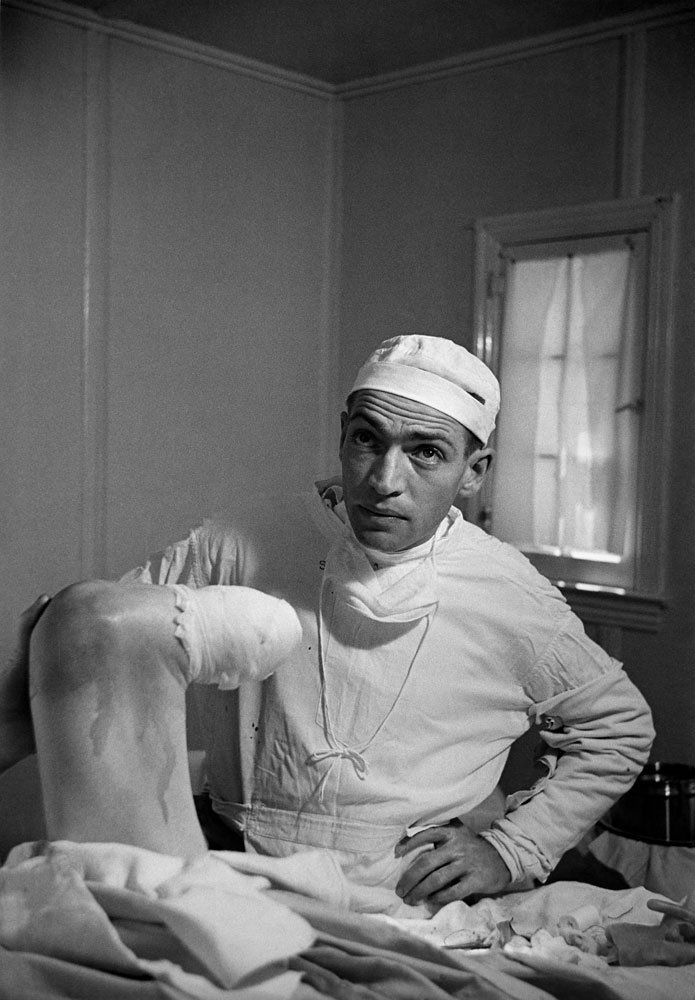
      Fig 3 Not published in LIFE. Dr. Ceriani examines his handiwork after the partial amputation of a patient’s leg, Kremmling, Co… 
      W. Eugene Smith—Time & Life Pictures/Getty Image

    • The above image resonates more with me than the others, just through seeing friends with leg amputations and how they have coped with them.
  • What do you think she means by ‘an ending without an ending’?
    • Ending without ending….. I believe she knew the ending without having to know it. Having the understanding that the time will come without knowing when that time is. Taking that as a project was her ending to this. By documenting the story she knows the end without having it as the end. It may sound like nonsense but I think I understand what it is she writes.

Bibliography

B. (n.d.). The Dad Project – Briony Campbell | Photography & Film. Retrieved January 27, 2020, from http://www.brionycampbell.com/projects/the-dad-project/ {assesed 27 Jan 2020}
(n.d.). https://time.com/3456085/w-eugene-smiths-landmark-photo-essay-country-doctor/. Retrieved January 27, 2020, from https://time.com/3456085/w-eugene-smiths-landmark-photo-essay-country-doctor/{assesed 27 Jan 2020}

Illustrations

Fig 1 Welcome to the end. The Dad Project – Briony Campbell | Photography & Film. Retrieved January 27, 2020, from http://www.brionycampbell.com/projects/the-dad-project/ {assesed 27 Jan 2020}

Fig 2 Me and Dad 25th August 2009. The Dad Project – Briony Campbell | Photography & Film. Retrieved January 27, 2020, from http://www.brionycampbell.com/projects/the-dad-project/ {assesed 27 Jan 2020}

Fig 3 Dr. Ceriani examines his handiwork after the partial amputation of a patient’s leg, Kremmling, Co… ://time.com/3456085/w-eugene-smiths-landmark-photo-essay-country-doctor/. Retrieved January 27, 2020, from https://time.com/3456085/w-eugene-smiths-landmark-photo-essay-country-doctor/{assesed 27 Jan 2020}

20200115-Part One Reflection

This is at times during EYV I tended not to do and move onto the next part. Although it’s not been full-on outside with my camera at the ready its been intriguing to see that its something I’ve done over the years. Taking any picture whether by film or sketch you’re documenting something.

  • Mood
  • Subject
  • Light
  • Action
  • Emotion
  • Expression

Your documenting it, the life of your family, pets, adventure. All have a form of documentation. I have seen at times how news teams can document life first hand, but when you don’t see the final product till weeks later, it annoys you that that have twisted what you have said or not shown the side you were trying to portray.

Documentary, reportage, photojournalism, art photography. All seem to along the same lines. Like Seawright mentions its the fine line between them. I see every picture captured shows lines of the above. Henri Cartier-Bresson decisive moment documents a capture in time. Add something special to it and its Art. Photography is a form of art that I believe is here to stay for and with technology changing this will endeavour to be greater in years to come.

20200115-exercise-The Real and the Digital

Is what we see today an honest image or a manipulated and edited picture to please or sell.

Today it is only two easy to change an image, whether this is in-camera or in the edit. Both ascetically or destructively removing parts of the picture, enhancing the image, changing the image like in project 5.  This is going on all the time, changing the picture to benefit the photographer or the industry they work for. Telling tales of people or hiding the truth. Or finding detail in digital images that may lead to convictions in a court of law. Digital files can hold information that’s not always commonly known. Shadow detail to the metadata within the digital file.

Two sides to every story, even early darkroom edits and the likes of Ansel Adams work in Yosemite Park dodging and burning in the darkroom to how he wanted the final image to be. That’s editing an image but ultimately it’s being changed. It’s not straight out of the camera (SOOC). It’s onto a plate. Add your chemicals and darkroom process and you have a photograph.

Today’s modern smartphone has numerous apps and gadget where photos can be manipulated, edited processed on the move. Add comical faces, music or even tag individuals into the picture with the apps like Instagram and Snapchat.

I’m with the modern-day digital age when it comes to social media apps etc. My Fujifilm cameras can wifi my selected JPEGs straight to my smartphone, where I can edit and post within minutes of taking the picture.

What actually is a truthful picture today. I’m not sure there is?

Things I tend to look for prior to taking an image are:

  • Lines
  • Light
  • Shadows
  • Subject